
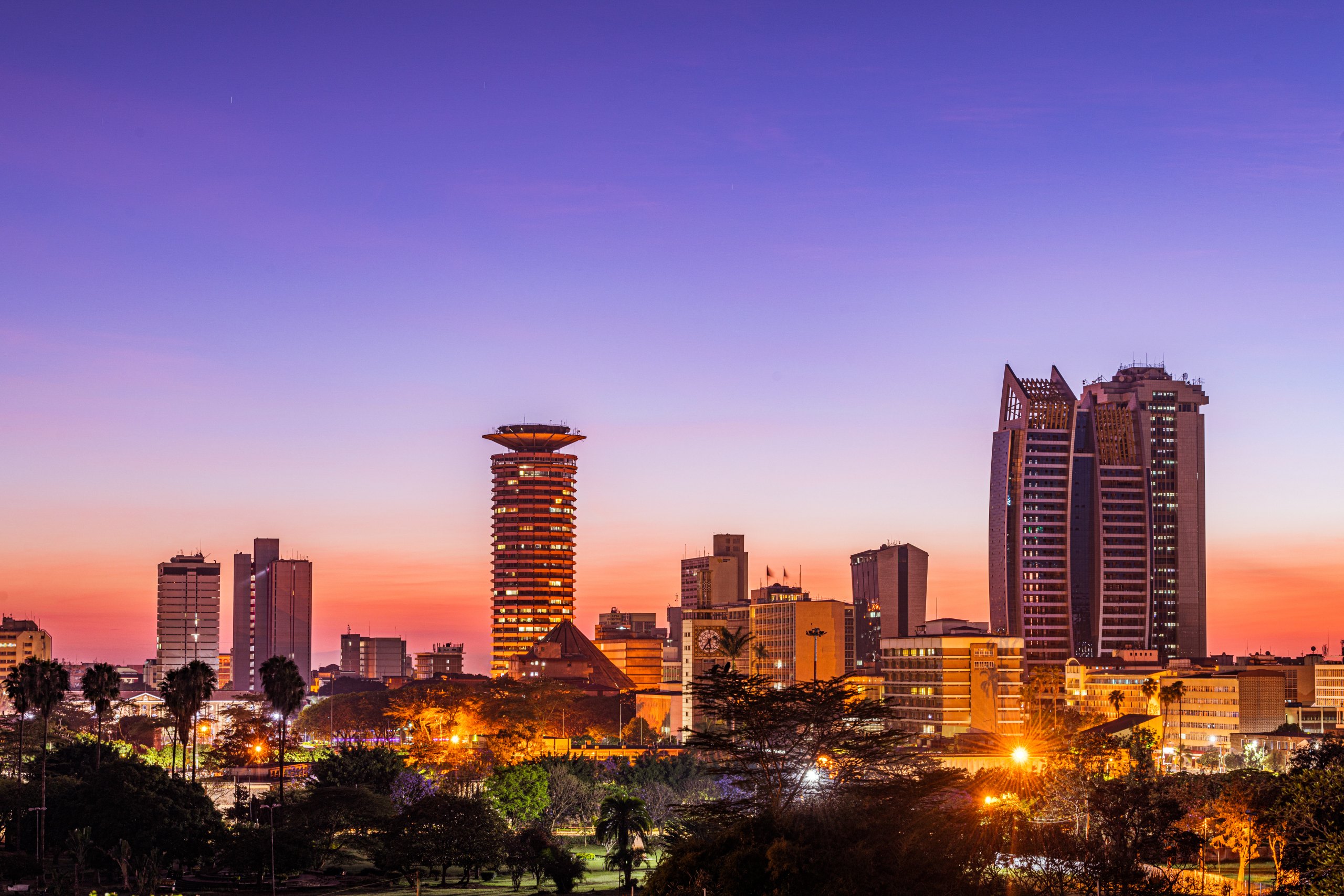
Nairobi
Nairobi is Kenya’s capital and the arrival point for almost every safari in the country, a city of roughly 4.4 million people sitting at 1,795 metres in the central highlands. International flights land at Jomo Kenyatta International Airport and light aircraft for the parks leave from Wilson Airport. It is also the only capital city with a national park inside its boundary, which is why a night here is rarely a wasted one.
What Nairobi Is and Why Kenyan Trips Start Here
Nairobi exists because a railway needed somewhere flat to put a depot, and it became the capital eight years later almost by accident. That origin still shows in the shape of the place. The city centre is a compact grid of offices and colonial era buildings; everything else spread outwards along roads, and the wealthy suburbs ended up west and north while industry and the largest residential areas went south and east.
For a traveller the practical question is how much time the city is worth. The honest answer is one to three nights. One night is a rest stop between flights, and there is nothing wrong with that. Two nights lets you do the Karen cluster properly and still leave for a park on the second morning. Three nights is for people who want the museums and the city centre too, or who are working rather than only travelling.
The constraint on all of it is traffic, which is discussed further down and which matters more to a Nairobi itinerary than opening hours do.
Nairobi also carries the nickname Green City in the Sun, and after a few days it stops sounding like a slogan. There is a lot of tree cover, several large parks, a forest in the middle of the northern suburbs and a national park on the southern edge.
Nairobi National Park on the City’s Doorstep
Nairobi National Park is a separate destination with its own page, and it deserves to be treated as a trip rather than as a city sight.
The essentials: 117 square kilometres, gazetted in 1946 as Kenya’s first national park, roughly ten kilometres from the central business district. Kenya Wildlife Service records over 100 animal species and more than 400 birds, including four of the animals usually grouped as the Big Five. There are no elephants. Gates run from 6am to 6pm.
It is genuinely a park, not a zoo, and the southern boundary is open to the Athi Kapiti plains so animals move in and out. What it is not is a substitute for the Maasai Mara or Amboseli. Go in with that clear and it is one of the better half days available anywhere near a capital city.
Attractions and Tours Around Karen and Langata
The single most useful thing to know about Nairobi’s attractions is that most of the ones visitors want sit in the same corner of the city, southwest of the centre in Karen and Langata. Grouping them into one day is the difference between a pleasant morning and four hours in traffic.
That cluster holds the Giraffe Centre, the Sheldrick Wildlife Trust elephant nursery, the Karen Blixen Museum and Bomas of Kenya. Each has its own page here with opening arrangements and what to expect, because each is a real subject rather than a line in a list.
Two scheduling notes that apply across the cluster. Several of these places open to the public only within a narrow daily window, and at least one normally requires arranging a visit well in advance rather than turning up. Check each before building a day around it, and build the day west to east so the return drive is not against the evening flow.
Museums, Monuments and City Centre Tours
The centre is walkable in daylight and rewards a couple of hours on foot with a guide who knows it. The Nairobi National Museum sits just north of the centre and is the best single introduction to the country’s prehistory and its peoples. Nearby are the Kenya National Archives on Moi Avenue and the Nairobi Railway Museum, which is the origin story of the city told through rolling stock.
The Kenyatta International Convention Centre is the tower everyone photographs, and its rooftop gives the clearest view over the city and out towards the park. Uhuru Gardens marks the site where independence was declared. Further out, African Heritage House sits above the Athi River south of the city.
Heritage tours and market tours cover the walking side of this in more detail.
Forest Walks and Green Space Tours in Nairobi
Karura Forest in the north is the one to prioritise if there is only time for one. It is a working urban forest with marked trails, a waterfall and caves, and it is used heavily by residents for running and cycling, which tells you something about how safe and well managed it is. The Nairobi Arboretum is smaller, closer in, and easier to fit around a morning.
Both are covered under forest walks in Kenya as an activity. What they offer a traveller here is a way to spend early morning usefully before the roads fill.
Where to Base Yourself in Nairobi
Where you stay is a decision to take with whoever is arranging the trip. What is worth carrying into that conversation is the geography above, because a hotel on the wrong side of the city can cost two hours a day.
Food Tours and Eating in Nairobi
Nyama choma, grilled meat eaten slowly and usually shared, is the thing to try first. It comes with kachumbari, a raw tomato and onion salad, and often with ugali, the stiff maize staple that goes with almost everything. Sukuma wiki, braised collard greens, is the other constant. Githeri, beans and maize cooked together, is home cooking rather than restaurant food but turns up in local places.
Coastal Swahili food is well represented in the city, and so is Indian food, going back to the railway. Nairobi’s coffee is worth the attention it gets, given what the country grows.
Kenyan food tours cover the subject properly. For a traveller with one evening, the useful instruction is simply to eat somewhere Kenyans eat rather than somewhere built for visitors.
Getting Around Nairobi on a City Trip
Ride hailing apps work across the city and are what most visitors use. Metered taxis exist and are marked in yellow. Matatus, the privately run minibuses, are the backbone of local transport and are cheap, fast and not designed with a first time visitor in mind; they are worth trying with someone who knows the routes rather than alone with luggage. Boda bodas, the motorcycle taxis, move through traffic when nothing else can, at a risk level each traveller has to judge.
Traffic is the real subject. A crossing that looks like twenty minutes on a map routinely takes an hour, and the morning and evening peaks are long. The practical response is to group activities geographically, start early, and avoid planning anything that requires crossing the city between four and seven in the afternoon.
Arriving in Nairobi by Air, Rail and Road
Jomo Kenyatta International Airport, southeast of the city, handles international and larger domestic flights. Wilson Airport, south of the centre, handles the light aircraft that serve the safari airstrips, including those in the Maasai Mara and at Amboseli. These are separate airports on opposite sides of town, and a same day connection between them needs proper time allowed for the drive.
Visitors need an electronic travel authorisation, applied for online through the official Kenyan government portal before departure. Apply in good time rather than at the airport.
By rail, the Madaraka Express standard gauge service connects Nairobi with Mombasa, with departures from both ends at 8am, 3pm and 10pm. One point catches people out: the Nairobi terminus is at Syokimau, around twenty kilometres from the city centre, so the train ride has a road transfer attached at each end.
By road, Nairobi is the hub of the national network, and most overland safari routes begin and end at the same place.
Day Trips and Safari Departures from Nairobi
Nairobi’s position makes a lot reachable without committing to a full safari. The Rift Valley runs west of the city and the escarpment road drops into it within an hour.
Lake Naivasha is the usual first stop, with Hell’s Gate National Park beside it, one of the few Kenyan parks where cycling and walking are permitted. Mount Longonot, a dormant volcano with a crater rim walk, sits on the same road. Closer in, the Ngong Hills ridge is a half day walk on the city’s western horizon.
Further out but still commonly reached from Nairobi are Lake Nakuru National Park to the northwest, Amboseli to the south and the Maasai Mara to the southwest. None of those three works well as a day trip; each wants at least one night.
Older archaeological sites south of the city, including Olorgesailie, are grouped on the Kenya attractions hub.
Safety and Practical Planning for a Nairobi Trip
Nairobi is a large city and the sensible precautions are the ones you would take in any large city, applied a little more consistently. Opportunistic theft is the common problem rather than anything more serious: phones out while walking, bags on the back of chairs, valuables visible in a stopped car.
Use ride hailing or an arranged driver rather than flagging transport down, particularly after dark. Walking in the central business district is fine in daylight and less advisable at night. Some areas are not places to wander into without a reason and a local guide, and any reputable guide will tell you which.
On the practical side: the currency is the Kenyan shilling, mobile money is used everywhere and often preferred to cash, and card acceptance is good in the areas visitors frequent. Tap water is not drunk. The altitude makes evenings cool enough for a layer in every month, which surprises people who packed only for the equator.
Rain falls mainly across April and May and again in November, in afternoon bursts rather than all day. December to March is the warmest and sunniest stretch.
Nairobi Trip Questions Travellers Ask
How many days should you spend in Nairobi?
One to three nights covers almost every case. One night is a transit stop. Two nights lets you do the Karen and Langata cluster and still leave for a park on the second morning, which is the most common pattern. Three nights adds the museums, the city centre and Karura Forest without rushing. Beyond that, Nairobi becomes a place you are living in rather than visiting.
Is Nairobi safe for visitors?
With normal city precautions, yes. Petty theft is the realistic risk rather than anything worse. Use ride hailing or an arranged driver instead of street transport, keep phones and bags out of sight while moving, avoid walking in the centre after dark, and take local advice on which areas to skip. Visitors who stick to these have an uneventful time, which is the point.
Is a visit to Nairobi National Park worth it before a proper safari?
Yes, if you have a spare morning, and no, if you are shortening time in a major park to fit it in. It holds four of the Big Five and over 400 bird species inside the city boundary, which is genuinely unusual, and the city skyline behind the animals is the reason to go. It is a different experience from a park drive, not a smaller version of one. It has its own page here with the detail.
What does it cost to enter Nairobi National Park?
Kenya Wildlife Service classes it as an Urban Park. A non resident adult pays USD 80 and a child or student USD 40. East African citizens pay KSh 1,000 and KSh 500, Kenya residents KSh 1,350 and KSh 675, African citizens USD 40 and USD 20. A combined Nairobi package covering the park with the Animal Orphanage and the Safari Walk costs more and saves money if you want all three. Checked against the KWS conservation fee schedule on 21 September 2026.
How do you get from Jomo Kenyatta airport to Wilson airport?
By road, across the city, and it is not a short hop. They sit on opposite sides of Nairobi and the drive passes through some of the worst of the traffic. Anyone connecting from an international arrival onto a safari flight the same day should allow considerably more time than the distance suggests, and should expect the transfer to be arranged rather than improvised.
What should you eat in Nairobi?
Nyama choma is the one to start with, grilled and shared, usually with kachumbari and ugali. Sukuma wiki turns up alongside most things. Swahili dishes from the coast and Indian food going back to the railway era are both well established in the city. Kenyan coffee is worth seeking out at source rather than at a hotel breakfast.
Do you need a visa for Kenya?
Visitors need an electronic travel authorisation, applied for online through the official Kenyan government portal before travelling. It is not issued on arrival in the way a visa once was, so apply in advance and carry the approval with you. Requirements and exemptions change, so check the official portal close to the date of travel rather than relying on older guidance.
12 Places to Visit in This Area
Individual sites within reach of here, each with its own guide. Some are written up because the name circulates and the place does not, which is worth knowing before you plan a drive around one.
Safaris That Visit Nairobi
3 of the 16 safaris listed here that visit Nairobi, from different operators where the listings allow it. Each is sold and run by an independent tour company. This site lists them and passes on enquiries; it takes no booking and charges you nothing.

12 Days Best of Kenya Safari
by Kori Safaris Verified operator
Operator quotes on request
View Safari

7-Day Fly-In Kenya Safari Package to Maasai Mara and Amboseli
by Insight Safari Holidays Verified operator
Operator quotes on request
View Safari

Kenya Classic: Amboseli, Tsavo & the Mara
by Ancient Africa Safaris Verified operator
From $9,400 per person
View Safari