
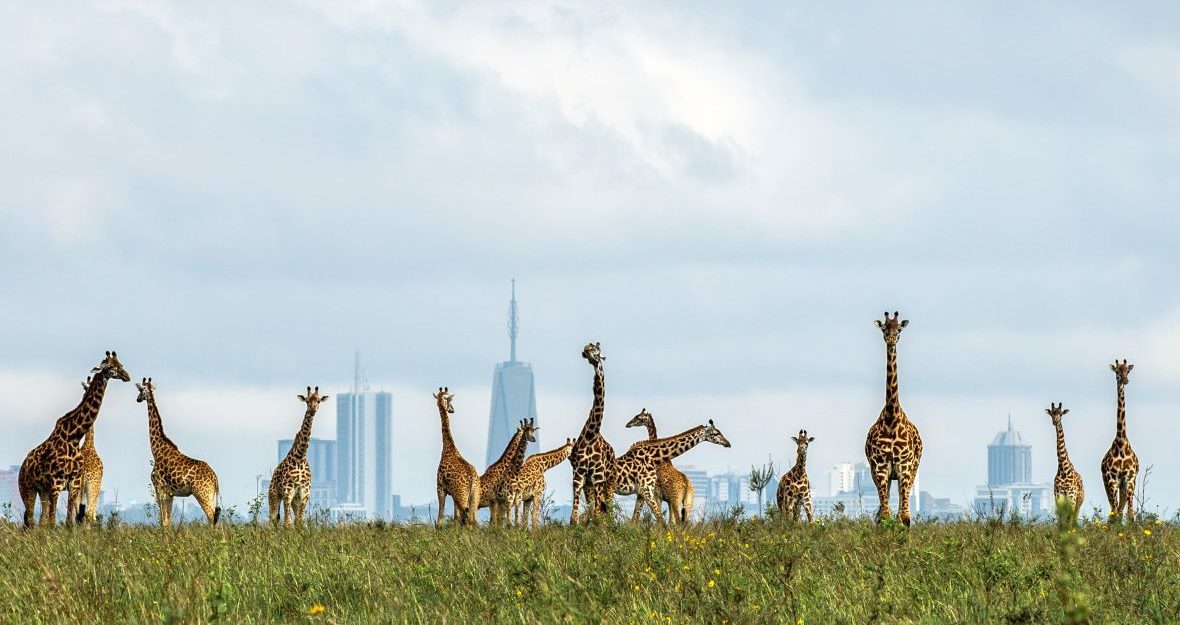
Nairobi National Park
Nairobi National Park covers 117 square kilometres on the southern edge of Kenya’s capital, close enough to the centre that lions and office towers appear in the same photograph. Kenya Wildlife Service gazetted it in 1946, the first national park in the country and in East Africa. It holds four of the animals usually grouped as the big five, and it is a working rhino sanctuary rather than a city zoo.
Where Nairobi National Park Sits on the Map
The park lies immediately south of the built-up city, roughly ten kilometres from the central business district by the figure the Kenya Wildlife Service and the national wildlife census both use. The main gate is on Lang’ata Road, past Langata Army Barracks and reachable from Nyayo National Stadium, and one KWS document gives that road distance as about eight kilometres. Jomo Kenyatta International Airport and Wilson Airport are both close, which is why so many Kenya trips begin or end with a morning here.
What the map does not show is that the park is the small, protected core of something much larger. The national wildlife census describes it as the protected core zone of the Athi Kapiti ecosystem, an area of roughly 2,000 square kilometres. The park is about six per cent of that. Everything that makes it work depends on the rest.
Kenya Wildlife Service markets the park as “the world’s only wildlife capital” and its own brochure calls it the only national park in the world next to a capital city. That phrasing belongs to KWS. It is repeated here as the park’s official description rather than as a verified claim, because no independent source establishing it has been found.
Size, Boundaries and the Open Southern Side
Three sides of the park are fenced against the city: north, east and west, where the boundary runs against suburbs, industry and the Nairobi to Mombasa road. The southern boundary is not fenced. It opens onto the Athi plains, and that gap is the single most important fact about how the park functions.
Animals use it. The national wildlife census estimates that 70 to 80 per cent of the park’s animals spend time outside the boundary in the southern dispersal areas. The park is a dry-season refuge with permanent water, not a closed enclosure, and the herds move in and out of it across land that is owned by other people.
That land is being built on. The census report is direct about the consequence: the corridors linking the park to the greater Athi Kapiti plains have been obstructed by development, urban sprawl and subdivision, or blocked outright by fences. The wildebeest migration that moved more than 30,000 animals through this system in the 1960s has collapsed completely. Warthog, waterbuck, Coke’s hartebeest and gazelle populations have fallen by around 70 per cent. Railway and road construction across the dispersal area has added underpasses and viaducts, and monitoring has found that many species do not use them.
This is not background. A visitor standing at the southern edge of the park is looking at the reason the park’s long-term future is argued about in Kenyan courts and newspapers, and it is more interesting than any single animal in the frame.
Wildlife in Nairobi National Park
Kenya Wildlife Service records over 100 animal species in the park. The 2021 national wildlife census, carried out on the ground in fifteen counting blocks based on the park’s road circuits, gives the clearest picture anyone has published of what is actually there.
| Impala | 1,641 | Common zebra | 304 |
| Buffalo | 988 | Hippo | 32 |
| Coke’s hartebeest | 546 | Baboon | 135 |
| Maasai giraffe | 147 | Warthog | 40 |
| Thomson’s gazelle | 108 | Waterbuck | 22 |
| Wildebeest | 95 | Eland | 89 |
Those are counts from a single census, not a permanent population. They are useful because they set expectations correctly. Impala, buffalo, hartebeest, zebra and giraffe are the animals a visitor will see, in numbers, in a morning. Wildebeest at 95 animals is the remnant of that lost migration.
Lion, leopard, cheetah, spotted hyena, black-backed jackal and serval are all present and all harder. Kenya Wildlife Service names three resident lion prides in the park: Kingfisher, Athi and Mokoyet. Crocodile and python are in the river systems. Suni, bushbuck and duiker are in the forest edge, and are seen by people driving slowly and looking sideways rather than forwards.
Rhino, and the Elephants That Are Not There
The park holds both black and southern white rhino, and Kenya Wildlife Service describes it as one of the country’s most successful rhino sanctuaries. Rhino here sit in dense bush along the river valleys and in the western uplands, and morning is the realistic window.
There are no elephants. This is the one thing every first-time visitor needs to know before setting expectations, because it is the reason the park holds four of the big five rather than five. Elephants need space and corridors on a scale the park cannot offer, and they are not part of the Athi Kapiti system as it exists today. For elephants, the destination is Amboseli or Tsavo East.
Birdlife and the March to May Migrant Peak
Kenya Wildlife Service records more than 400 bird species here, which is a remarkable figure for 117 square kilometres, and notes that numbers swell between March and May when European migrants arrive. The census recorded helmeted guineafowl and ostrich in the hundreds, and smaller numbers of grey crowned crane, secretary bird, kori bustard and black-bellied bustard.
The habitat mix is what does it. Open plains, highland dry forest along the northern edge, the Athi and Mbagathi river valleys with riverine woodland, seasonal dams and rocky gorges sit inside one short drive. For anyone building a Kenya trip around birdwatching, a half-day here at the start is worth more than it looks.
The Ivory Burning Site
Inside the park, a short distance from the main gate, is the ivory burning site. Kenya Wildlife Service describes it as one of the most important landmarks in the history of wildlife conservation: retired Kenyan presidents burned confiscated elephant ivory and rhino horn here, and the ashes are still placed at the site as a memorial and a visitor attraction.
The first of those burns, in 1989, was a deliberate act of international signalling before a CITES meeting, and it is generally credited with shifting the global argument about the ivory trade. Individual tonnages are widely quoted online and could not be confirmed from a primary source for this page, so none are given here. The site itself is worth the stop regardless of the arithmetic.
Game Drives, Picnic Sites and What Visitors Actually Do
The park runs on game drives. Kenya Wildlife Service lists three ways to take one: self-drive in your own or a hired vehicle, hire of a KWS tour van, and bus shuttles on selected days. The road network is graded and in dry weather an ordinary car with reasonable clearance will manage the main circuits, which is not true of most Kenyan parks.
Beyond driving, KWS names picnic and event sites at Impala observation point, the ivory burning site, Kingfisher picnic site, Mokoyiet picnic site and the Club House near the main gate. These are used for picnics, corporate days and weddings as much as for wildlife, and they are the reason the park fills up at weekends with Nairobi residents rather than tourists.
Walking is not a general option in the park itself, for the obvious reason. The adjacent Nairobi Safari Walk is the place for that. Night drives are not part of the standard offer here; the gate rule settles it.
Entry Fees for Nairobi National Park
The park sits in the Kenya Wildlife Service Urban band, which is its own category and applies to no other park. Figures below come from the KWS conservation fee schedule of October 2025, made under Legal Notice No. 160 of 2025, checked against the published schedule on 21 September 2026. Fees are set by regulation and are revised, so confirm on kws.go.ke before travelling.
| Category | Adult | Child or student |
|---|---|---|
| East African citizen | KSh 1,000 | KSh 500 |
| Kenya resident | KSh 1,350 | KSh 675 |
| African citizen | USD 40 | USD 20 |
| Non-resident | USD 80 | USD 40 |
Vehicles are charged separately by size, from KSh 600 a day for a car with fewer than six seats up to KSh 5,000 for a bus of 45 seats or more. There are no Kenya Wildlife Service guest houses or campsites inside the park, so the camping tariff does not apply; accommodation is in the city or at privately run lodges on the park boundary. Tickets are sold through the KWS payment portal on eCitizen.
The Nairobi Package With the Safari Walk and Animal Orphanage
The Nairobi Animal Orphanage and the Nairobi Safari Walk sit at the main gate end of the park and are separate KWS facilities with their own sanctuary-band tickets. The fee schedule also sells a combined Nairobi Package covering the national park together with both, at KSh 1,300 for an East African citizen adult, KSh 1,750 for a Kenya resident adult, USD 105 for a non-resident adult and USD 55 for an African citizen adult, with child rates alongside each. On the same schedule, checked on 21 September 2026, a package covering only the orphanage and the safari walk is also listed.
The package is worth the arithmetic for anyone with children or half a day rather than a full one. The safari walk is a raised boardwalk through enclosures, which is the one place near the city where you can see a Kenyan habitat on foot.
Getting There, Gates and Timing
Gates open at 6:00 and close at 18:00, and visitors must be out by dusk unless staying overnight at one of the lodges inside or on the boundary. The park speed limit is 40 kilometres an hour, off-road driving is prohibited, wildlife must be viewed from at least 20 metres, and single-use plastic is banned across the KWS estate.
The main gate on Lang’ata Road is the one every map application chooses, and it is also the one that queues, particularly at weekends. There is a second entrance off Magadi Road on the Mbagathi side, which puts a vehicle straight into the western uplands and suits early starts and wildlife photography. Nairobi traffic, not park distance, decides how long the journey takes; leaving Karen or the city centre before six is the difference between a good morning and a lost one.
How Nairobi National Park Fits a Longer Kenya Trip
It works best as the first or last morning of a trip, not as a substitute for one. Half a day covers the main circuits comfortably. Combined with the Sheldrick Wildlife Trust elephant nursery, the Giraffe Centre and the Karen Blixen Museum, all of which are in the same corner of the city, it makes a full and genuinely good Nairobi day.
What it is not is a preview of the Maasai Mara at a discount. The scale is different, the density is different and there are no elephants. What it does offer that no other Kenyan park can is a rhino sighting and a lion pride inside an hour of an international airport. For the city itself, and where to stay and eat around it, start at Nairobi. For other short escapes from the capital, Ngong Hills and Ol Donyo Sabuk are the near ones.
Nairobi National Park Questions
How much does it cost to enter Nairobi National Park?
The park is in the Kenya Wildlife Service Urban band: KSh 1,000 for an East African citizen adult and KSh 500 for a child, KSh 1,350 and KSh 675 for a Kenya resident, USD 80 and USD 40 for a non-resident, and USD 40 and USD 20 for an African citizen. Vehicles are charged separately from KSh 600 a day. Figures are from the October 2025 KWS conservation fee schedule, checked on 21 September 2026.
Are there elephants in Nairobi National Park?
No. The park holds four of the big five: lion, leopard, buffalo and rhino. Elephants are not part of this ecosystem. The elephant orphanage run by the Sheldrick Wildlife Trust is nearby but separate, and the animals there are orphans in care rather than a wild population.
Can you self-drive in Nairobi National Park?
Yes. Kenya Wildlife Service lists self-drive alongside hired KWS tour vans and bus shuttles on selected days. The main circuits are graded and passable in an ordinary vehicle in dry weather, though clearance helps after rain. Off-road driving is prohibited and the speed limit is 40 kilometres an hour.
How long do you need in the park?
Three to four hours covers the main circuits without rushing. A dawn start is worth more than a longer visit later in the day, because predators are active early and the light is better. A full day suits anyone combining the park with the safari walk and the animal orphanage on the Nairobi Package ticket.
Is it better than a proper safari park?
Different rather than better. The density of plains game is good, the rhino population is genuinely significant and the setting is unlike anywhere else. What it cannot match is scale, solitude and the sense of a landscape without a city on its edge. Treat it as a strong half-day, not as a replacement for Amboseli, Tsavo or the Mara.
Why does the park have an unfenced southern boundary?
Because the animals need it. Between 70 and 80 per cent of the park’s wildlife spends time outside the boundary on the Athi Kapiti plains, which the national wildlife census describes as a roughly 2,000 square kilometre ecosystem for which the park is the protected core. Fencing the south would turn the park into an enclosure.
When is the best time to visit?
Early morning, any month. Across the year, the drier periods concentrate animals on the park’s permanent water, and March to May brings the European bird migrants that push the species list up. Weekday mornings are quieter than weekends, when the picnic sites fill with Nairobi families.
Safaris That Visit Nairobi National Park
3 of the 4 safaris listed here that visit Nairobi National Park, from different operators where the listings allow it. Each is sold and run by an independent tour company. This site lists them and passes on enquiries; it takes no booking and charges you nothing.
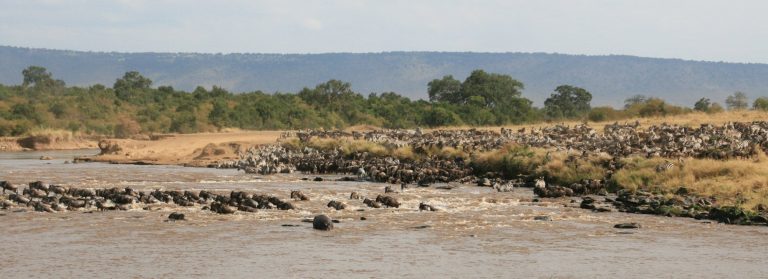

12 Days Best of Kenya Safari
by Kori Safaris Verified operator
Operator quotes on request
View Safari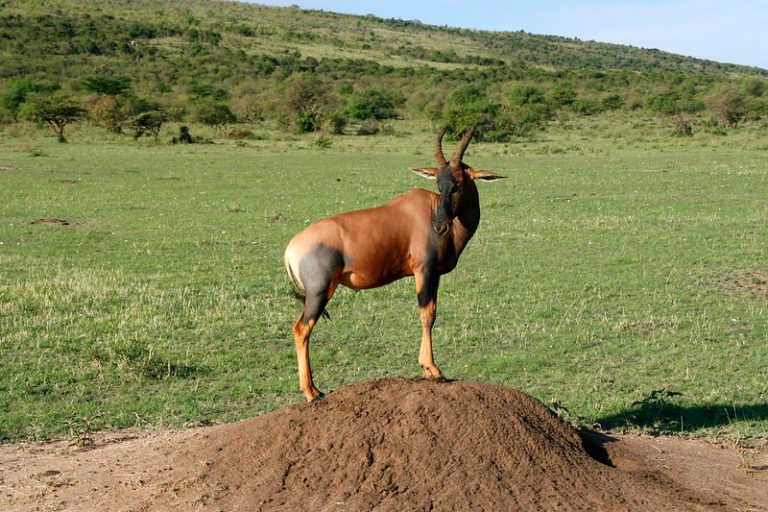

3 Day Kenyan Honeymoon Safari
by Insight Safari Holidays Verified operator
Operator quotes on request
View Safari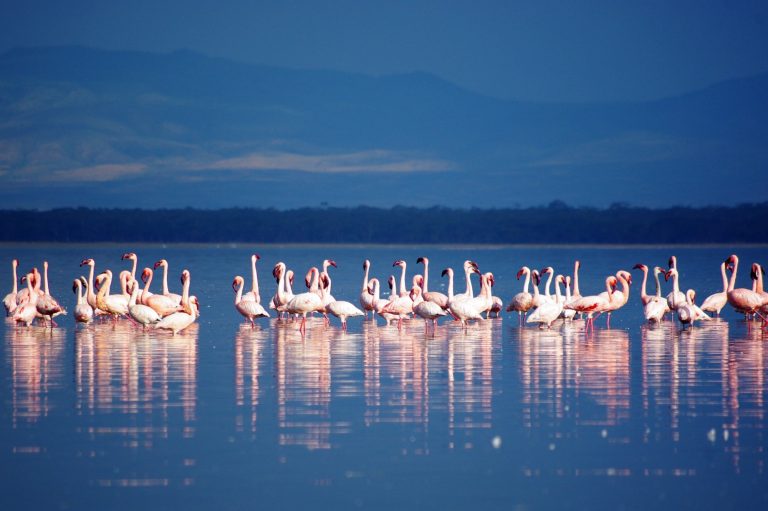

10 Day Kenya Birding Safari
by Wild Whispers Africa Verified operator
Operator quotes on request
View Safari