
Maasai Cultural Experiences in Kenya
Maasai cultural visits are sold on almost every southern Kenya itinerary, and they range from households hosting visitors on their own terms to commercial villages built beside park gates. This guide explains how to tell the two apart, what a visit involves, and how photography consent actually works.
Maasai cultural visits are sold on almost every southern Kenya itinerary, and they range from households hosting visitors on their own terms to commercial villages built beside park gates. This guide explains how to tell the two apart, what a visit involves, and how photography consent actually works.
Safaris That Include Maasai Cultural Experiences
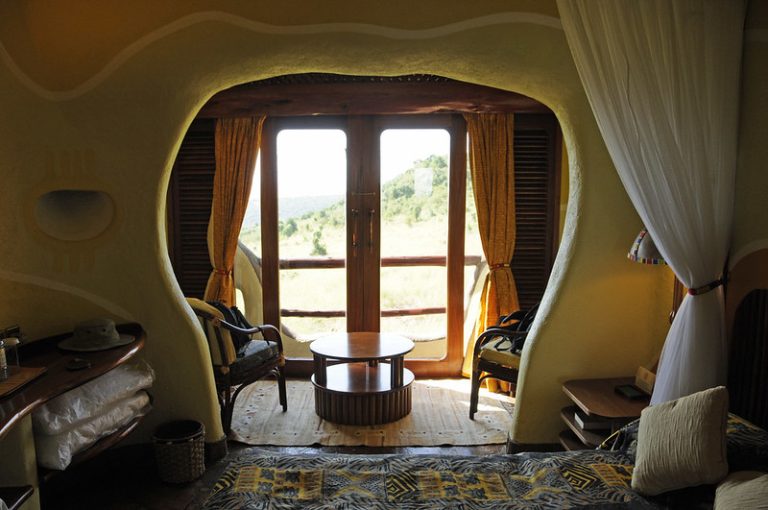

3 Days Amboseli National Park Safari, Adventure Kenya
by Kori Safaris Verified operator
Operator quotes on request
View Safari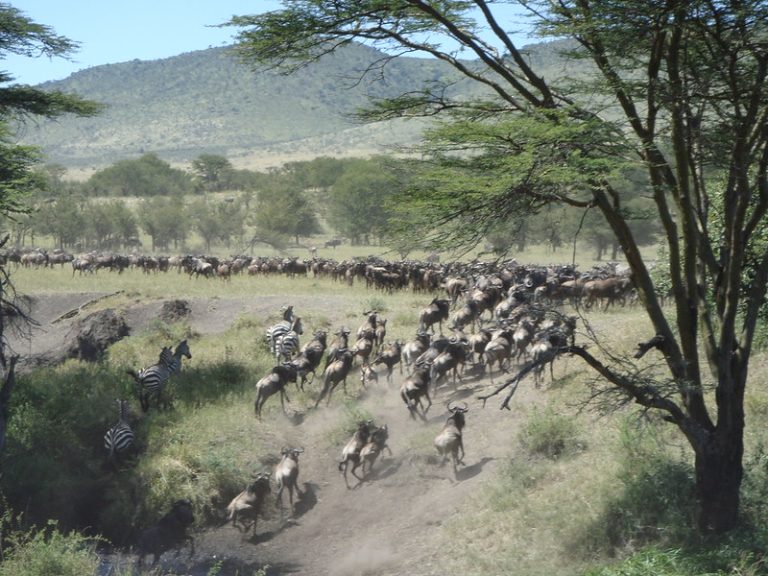
4 Days Wildlife Safari Amboseli, Nakuru, Masai Mara Kenya
by Kori Safaris Verified operator
Operator quotes on request
View Safari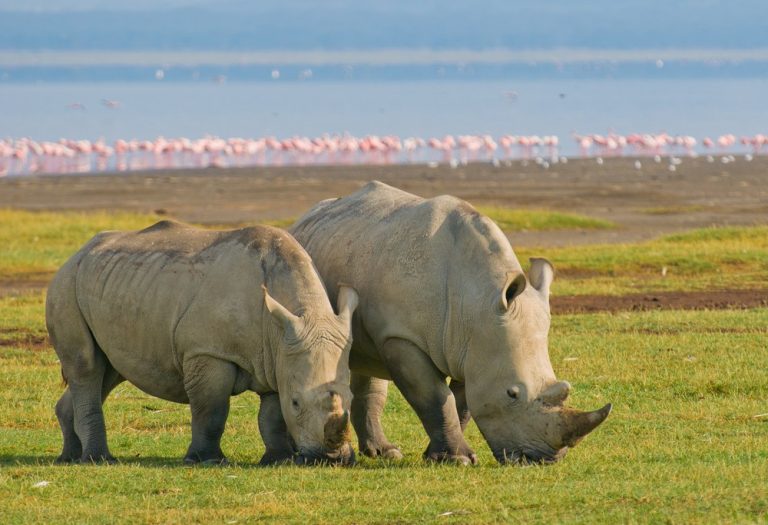

9 Days Kenya Safari
by Wild Whispers Africa Verified operator
Operator quotes on request
View Safari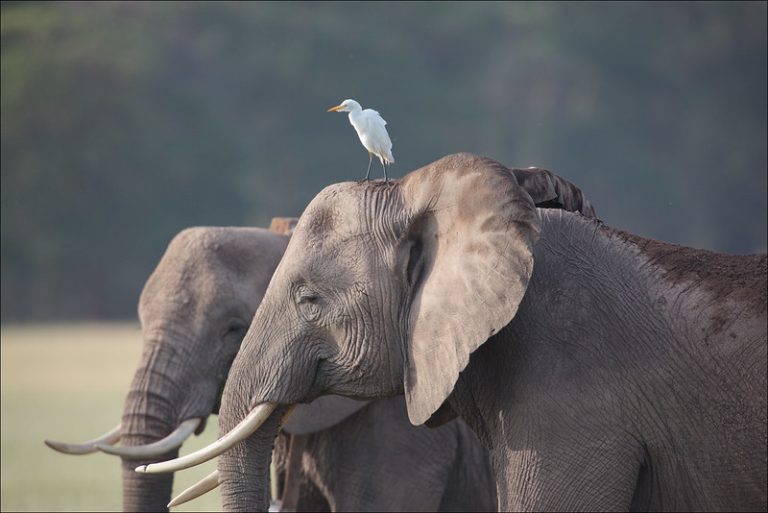

3 Day Safari Amboseli Kenya
by Insight Safari Holidays Verified operator
Operator quotes on request
View Safari

3 Days Masai Mara Safari
by Tranquil Safaris Verified operator
Operator quotes on request
View Safari
7 Days Wildlife Safari in Kenya
by Kori Safaris Verified operator
Operator quotes on request
View SafariSee all 25 safaris that include maasai cultural experiences
Maasai Cultural Guide in Kenya
Almost every safari itinerary in southern Kenya offers a Maasai cultural visit, and the phrase covers two completely different things. One is a household or a group of households that has decided to host visitors, sets its own terms and keeps the money. The other is a commercial enterprise built beside a park gate, where performers are paid a wage or a share by whoever owns the gate and the dancing starts when a vehicle pulls up. Both are legal. Both are common. Only one of them is what the brochure says it is.
Telling them apart is not difficult once you know what to ask, and it is the single most useful thing a traveller can learn before doing this. The rest of what follows covers who the Maasai are now rather than who they were, what actually happens during a visit, how photography consent works in practice, and where in Kenya these experiences are found.
The Maasai Are a Living Community, Not a Heritage Display
The Maasai are Maa speakers living across southern Kenya and into northern Tanzania. The 2019 Kenyan census counted 1,189,522 Maasai in Kenya, concentrated in Narok and Kajiado counties but present far beyond them. Maa is also the language of the Samburu, the Ilchamus and the Parakuyu, who call it ol Maa as the Maasai do; the four are historically related and a traveller who visits both Maasai and Samburu communities will hear the relationship in the vocabulary.
Livestock remains central to Maasai identity and to a great many household economies. It is not the whole of either. Maasai families run shops and transport businesses, teach, practise law, hold county office, lease land to conservancies, work in lodges as managers and guides rather than only as spear-carrying doormen, and send children to boarding school in Narok and Nairobi. Land tenure has shifted from group ranches to individual title across much of Kajiado and Narok, which changed how grazing works and how tourism revenue is distributed. A page that describes Maasai life purely in the present tense of ceremony and cattle is describing a subset, and usually the subset that has been arranged for visitors.
A word worth getting right: the thorn-fenced circle of houses around a livestock enclosure is an enkang, sometimes called a boma. A manyatta is properly a warriors' encampment built for the eunoto ceremony, when a cohort of young men moves towards elderhood. Tourism copy uses "manyatta" for both. Using the right word signals to a host that the visit was prepared for.
Community-Run Visits and Staged Commercial Villages
The distinction that matters is ownership, and specifically who decides and who is paid. In a community-run visit, the household or the group that hosts you controls access, sets the terms and receives the fee directly or through a committee it elected. In a staged commercial village, a third party owns the enterprise, contracts performers, collects the entry fee at the gate and pays out whatever margin it chooses. The performance can be skilful in both cases. The economics are not remotely the same.
Questions that separate them, asked of the operator before the day rather than at the gate:
- Who owns the place being visited, and who receives the entry fee? A straight answer names a community group, a conservancy committee, a family or a company. An evasive answer is itself the answer.
- Is the village where people actually live, or a site built for visitors? Both can be worth doing. Only one should be described as the former.
- Is there a fixed, published charge, and does it cover everything? Recurring complaints in traveller reviews describe a per-person charge quoted up front followed by sustained pressure to spend a great deal more inside.
- Does the guide come from the community being visited, or is the community interpreted to you by an outsider?
- Can the visit be declined by the hosts on a given day? A genuine household sometimes has a funeral, a sick animal or a school run. A commercial village never does.
Two further signals are worth noticing once you arrive. Beadwork offered as handmade by the family should vary from household to household, because it is made by different hands; identical stock in every doorway generally means a wholesaler. And a place that insists it has neither electricity nor mobile phones, while solar panels and handsets are plainly visible, has decided that the truth is less marketable than the script. Neither observation makes a visit worthless. Both tell you what kind of visit it is.
What the Conservancy Model Changed
The clearest structural answer to "does any of this reach the community" in southern Kenya is the Mara conservancy system, and it is worth understanding because it underpins most of the better cultural experiences in the region. Individual Maasai landowners lease their land into a conservancy, commit it to wildlife-compatible use, and receive a lease payment tied to the agreement each of them signs. The Maasai Mara Wildlife Conservancies Association, which coordinates the system, states 24 conservancies in the Greater Mara, 16,530 landowners and 178,668 hectares under lease, figures checked on its own site in September 2026.
The northern equivalent works differently but at larger scale. The Northern Rangelands Trust reports 47 member community conservancies covering 6.37 million hectares, with more than a million people in the member communities and 1,366 people in permanent employment across the network. Il Ngwesi, in Laikipia, is the pioneering example on the Maasai side of that system: community elders set aside 8,675 hectares for wildlife, and the eco-lodge built there in 1996 is owned, run and staffed by the Laikipiak Maasai community rather than leased to an outside operator.
Why this matters for a cultural visit: in a conservancy the hosts are landowners and shareholders in the tourism business, not contractors standing outside it. The conversation changes accordingly. It tends to be less about jumping and more about grazing rotation, school fees, lion compensation schemes and what the lease actually pays.
What Actually Happens During a Maasai Cultural Visit
The standard shape runs two to three hours and rarely more, though a conservancy-based visit can stretch across a morning. Expect some or all of the following, in an order the hosts choose:
- A greeting at the gate of the enkang, usually by senior men, with an explanation of who lives there and how the households relate.
- Singing, and often the adumu, the jumping dance drawn from the eunoto ceremony and shortened for visitors. It is a real dance performed out of its ceremonial context, which is worth knowing rather than worth objecting to.
- Entry into a house, which is dark, low and smoky, built by women from a frame of branches sealed with mud and dung. This is the part most visitors remember and the part where photography most needs asking about.
- Fire-making with a hardwood drill, demonstrated because it is genuinely quick in practised hands.
- Beadwork laid out for sale, usually by the women who made it.
- In conservancy and community-run settings, a walk with a guide who reads tracks, names plants and explains what each one is used for, and often a visit to a school or clinic that tourism revenue funds.
Traveller accounts consistently report that the most rewarding version is the least scripted: a guide taking visitors to his or her own family, where questions get answered rather than deflected and nothing is on a timer. That is harder to arrange from a hotel desk and easy to arrange through an operator who works in one place year-round.
Photography, Consent and Paying for Pictures
Photographing a person in Kenya without permission is not acceptable and not lawful, and the fact that a visit has been paid for does not transfer anybody's consent. A blanket permission granted by a host at the gate covers the visit in general; it does not cover a close portrait of a particular woman who has not been asked.
Practical handling that works:
- Ask each time, through the guide if there is a language gap, and accept a refusal without negotiating it.
- Ask before photographing inside a house. Interiors are private space and permission for the yard is not permission for the bedroom.
- Expect that in heavily visited places a payment may be requested for portraits. Agree the amount before the shutter, not after, and treat the request as legitimate rather than as an imposition.
- Never photograph a ceremony unless explicitly invited. Circumcision rites, funerals and the private stages of eunoto are not exhibits.
- If the photographs are going to be published or sold, say so and get agreement for that specifically. A holiday snapshot and a stock image are different requests.
- Children need their guardian's agreement, not their own.
Buying Beadwork Without Being Sold To
Maasai beadwork is a real craft with a real grammar: colour, pattern and form carry meaning about age set, marital status and occasion, and the pieces made for sale are usually simplified versions of the pieces made for use. Buying directly from the woman who made an item is the shortest route from a traveller's money to a household.
The failure mode is pressure. Reviews describe visitors steered towards the most expensive item first, told nothing else is available, and then shown a larger and cheaper selection once the cash is gone. The defence is simple: decide a budget beforehand, walk the whole line before buying anything, buy from more than one seller if several have laid out stock, and be willing to say that a price is beyond what you have. Bargaining is expected in a market and much less appropriate in someone's home.
Where Maasai Cultural Experiences Happen
The activity is concentrated in Maa-speaking country in the south and the central highlands. Each of these places offers something specific for this activity rather than being a destination write-up in miniature.
| Area | What it offers for a cultural visit |
|---|---|
| Maasai Mara | The largest concentration of visits in the country, and the widest quality range. The conservancy-based options are the ones with a documented ownership structure. |
| Mara North, Mara Naboisho, Olare Motorogi, Ol Kinyei, Olderkesi | Leaseholder conservancies where the hosts are landowners in the business. Walking with a Maasai guide is standard rather than exceptional. |
| Amboseli | Kajiado Maasai communities on the group ranches around the park, with cultural visits often combined with a conservation or human-wildlife conflict discussion. |
| Laikipia | Il Ngwesi and neighbouring community conservancies, where the cultural content is inseparable from the conservation story. |
| Chyulu Hills | Maasai group ranch land between Amboseli and Tsavo, quieter and much less visited. |
Ceremonies, Festivals and What Is Not for Visitors
Maasai ceremonial life runs on age sets, and the big transitions are collective events organised over months. Eunoto, the passage of a warrior cohort towards elderhood, is the one most often described in guidebooks. It is not scheduled for tourism, it is not annual, and attendance is by invitation from the families involved. An operator advertising guaranteed attendance at a ceremony on a fixed date is almost certainly selling a re-enactment.
Female genital cutting appears in older writing about Maasai initiation. It is illegal in Kenya under the Prohibition of Female Genital Mutilation Act and is the subject of active campaigning by Maasai organisations. It is not something a visitor will be shown, and it should not be treated as a cultural curiosity.
Planning a Maasai Cultural Visit
Timing is flexible because this is not a wildlife activity, though the long rains around April and May make secondary roads difficult in Narok and Kajiado. Early morning and late afternoon are better than the middle of the day, for heat and for the simple reason that households are busier and less staged at those hours.
Dress modestly: shoulders and knees covered is the usual standard, and the shuka a visitor may be offered is a courtesy rather than a costume. Learn a greeting in Maa. Bring small denominations if payments for photographs are likely. Ask before entering a house, before touching livestock and before stepping into a stock enclosure. Gifts handed directly to children encourage begging along roadsides and are better routed through a school or clinic if the host suggests one.
Independent verification is available and under-used. Ecotourism Kenya has run an eco-rating certification scheme since 2002, awarding Bronze, Silver and Gold against criteria that include social and cultural performance alongside environmental management, and it publishes a directory of certified facilities. The Kenya Community Based Tourism Network exists for the same purpose on the enterprise side. Neither is a guarantee, but a rating you can look up beats an adjective on a brochure.
Questions Travellers Ask About Maasai Cultural Visits
Is visiting a Maasai village exploitative?
It depends entirely on the arrangement. Cultural tourism is an income source many Maasai households and conservancy communities have chosen deliberately, and treating it as inherently wrong takes that choice away from them. What is exploitative is a structure where the community is the attraction and somebody else is the owner. Ask who is paid, and the question largely answers itself.
Is it better to visit a village near the park gate or one further away?
Proximity to a gate correlates with volume and with staging, because the business model depends on a steady stream of vehicles. Visits arranged inside a conservancy, or to a guide's own family, are generally less scripted. That is a tendency rather than a rule.
Should I bring gifts?
Ask the operator first. Sweets and pens handed out at the roadside create problems that outlast the visit. Where a host names a specific need, such as school materials or a clinic contribution, that is a different matter and usually welcomed.
Do I need to speak Swahili or Maa?
No. English is widely spoken by guides and by many hosts. A greeting in Maa is a courtesy that goes a long way; supa is the common one, with sopa as a reply, though usage varies by area and by who is being addressed.
Can I take photographs during the jumping dance?
Usually yes, because it is performed for visitors, but ask first. The rule about individual portraits still applies afterwards, and photographing inside a house needs its own permission.
How long does a cultural visit take?
Two to three hours is typical for a village visit. A conservancy-based experience that includes a guided walk and a school or clinic visit can fill a morning. Anything advertised as forty minutes is a photo stop.
Is the jumping dance authentic?
The adumu is a genuine dance belonging to the eunoto ceremony, performed out of its ceremonial context and shortened for visitors. Calling it fake is inaccurate; calling it daily life is also inaccurate.
For the wider picture of how community tourism in Kenya is organised, and for the Swahili, Samburu and Turkana equivalents, see cultural tours in Kenya, Swahili cultural experiences and Turkana cultural experiences. Built heritage, museums and historic sites are covered separately under heritage tours in Kenya.