
Hot Air Balloon Safaris in Kenya
Ballooning is a settled, year-round product in Kenya rather than an occasional novelty, flown daily over the Maasai Mara since the 1970s and, more recently, from community land beside Amboseli. This guide covers where flights actually launch, how the morning runs, who can fly and how the activity is regulated.
Ballooning is a settled, year-round product in Kenya rather than an occasional novelty, flown daily over the Maasai Mara since the 1970s and, more recently, from community land beside Amboseli. This guide covers where flights actually launch, how the morning runs, who can fly and how the activity is regulated.
Safaris That Include Hot Air Balloon Safaris
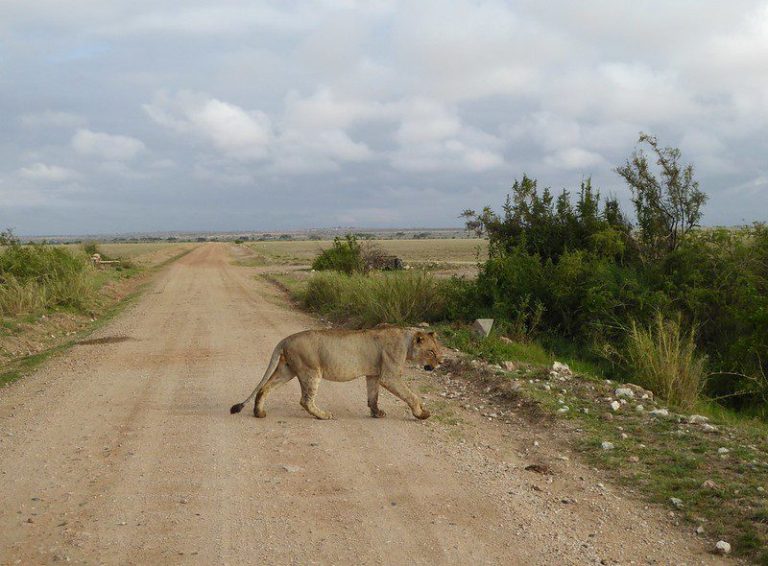

3 Day Masai Mara Kenya Safari
by Oree Safaris Verified operator
Operator quotes on request
View Safari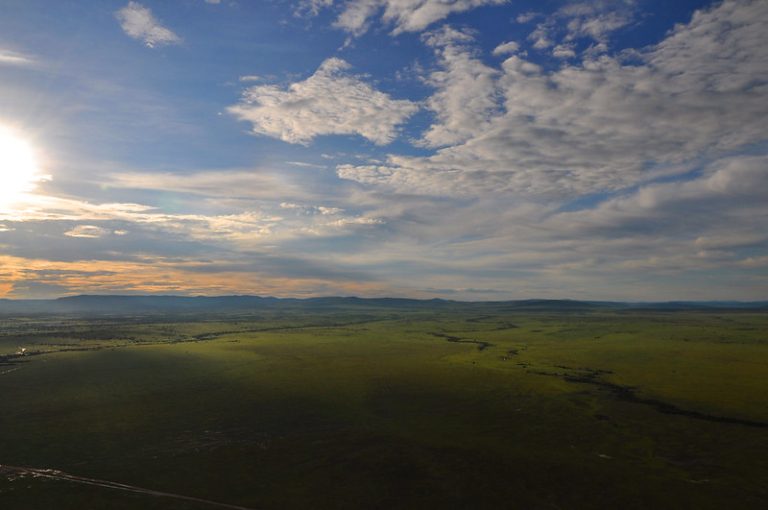

3 Day Masai Mara Safari
by Wild Whispers Africa Verified operator
Operator quotes on request
View Safari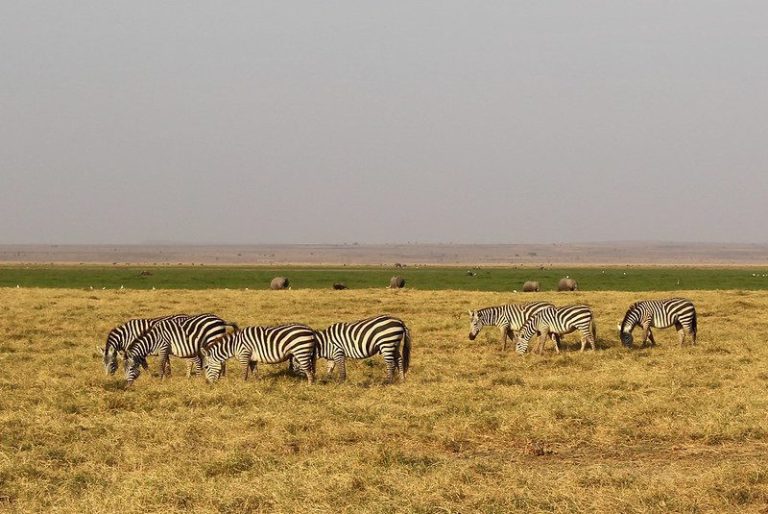

3 Day Safari Masai Mara
by Insight Safari Holidays Verified operator
Operator quotes on request
View Safari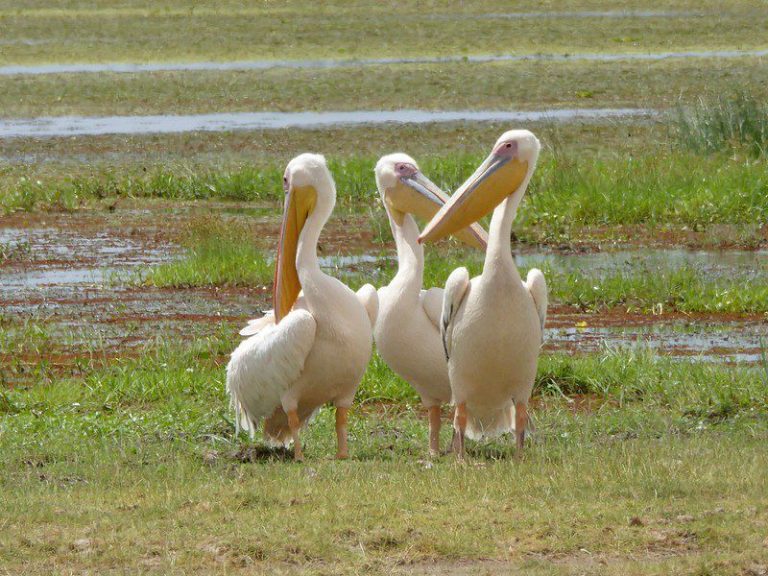
8 Days Safari in Kenya
by Wild Whispers Africa Verified operator
Operator quotes on request
View Safari

3 Days Amboseli National Park Safari, Adventure Kenya
by Kori Safaris Verified operator
Operator quotes on request
View Safari
10 Day Kenya Birding Safari
by Wild Whispers Africa Verified operator
Operator quotes on request
View SafariSee all 11 safaris that include hot air balloon safaris
Hot Air Balloon Safaris Guide in Kenya
A balloon safari is the one Kenyan safari activity that has almost nothing in common with the rest of the trip. There is no engine, no track to follow and no guide steering towards a sighting. The pilot has a burner and the wind, and everything else is negotiation. What that buys is a viewpoint no vehicle can reach: the grain of the plains, the shape of a river system, the geometry of a herd seen from directly above.
Kenya is one of the few African countries where ballooning is a settled, year-round commercial product rather than an occasional experiment. It has been flown commercially over the Maasai Mara since the 1970s, and a second, quite different operation has grown up on the Amboseli side of the country. This guide covers where it happens, how a flight morning actually runs, who is allowed on board, how the activity is regulated, and what the authorities charge for it.
Where ballooning actually happens in Kenya
Two areas support scheduled balloon flights. The first and much larger is the Maasai Mara, where several companies fly daily from launch sites inside and beside the national reserve. The second is the Amboseli ecosystem, where flights launch from a balloon camp on community land just outside Kimana Gate, at the south-eastern edge of Amboseli National Park.
It is worth being blunt about the third name that circulates: Tsavo West and Tsavo East appear on aggregator pages as balloon destinations, but no operator running scheduled flights in either park could be identified while this guide was researched. Treat a Tsavo balloon offer as something to verify directly with whoever is selling it, including which airstrip or camp the flight launches from. The same caution applies to Samburu, Lake Nakuru and Laikipia, which are sometimes listed and are not, on the current evidence, balloon destinations.
The Mara operation is the older one. Balloon Safaris Limited, which still flies today, dates its first Mara flight to 1976, launched from Keekorok by the film-maker Alan Root. That history matters for a practical reason as well as a romantic one: the routines travellers now meet everywhere in East Africa, from the pre-dawn pick-up to the breakfast laid out at the landing site, were worked out in the Mara over decades.
How a balloon morning runs
The shape of the morning is consistent across both areas, and it is longer than the flight time suggests. Budget four to five hours from pick-up to being back at camp.
| Stage | Maasai Mara | Amboseli and Kimana |
|---|---|---|
| Collection from camp | Around 04:30 to 05:00 | From about 04:15, arriving at the balloon camp near 05:15 |
| Briefing and inflation | At the launch site in the dark | At the balloon camp in the dark |
| Launch | Just before dawn, near 06:30 | Generally 06:15 to 06:30 |
| Time in the air | About an hour, landing near 07:15 to 07:30 | About an hour, varying between 45 and 90 minutes |
| After landing | Bush breakfast, then a game drive back | Bush breakfast, then the drive back |
Inflation is part of the experience rather than dead time. The envelope is laid out flat, cold air is blown in by fan, and the burner is fired to lift it upright, which is loud, hot and startling at close range. Passengers board while the basket is on its side in some operations and upright in others, which is why the briefing includes a bracing position for landing.
Landings are the part nobody describes in advance. A balloon lands where the wind allows, which may be a long way from any road. The ground crew follows in vehicles and finds the basket. Depending on wind speed the basket may tip onto its side and drag briefly, which is normal and is exactly what the bracing position exists for.
The Maasai Mara flight
Mara flights drift over open grassland, riverine forest along the Mara and Talek watercourses, and the broken country below the Oloololo Escarpment. Flights cover something in the order of eight to twelve kilometres, though this is entirely a function of the wind on the day and a short flight is not a failed one. Balloons in the Mara carry anything from four to sixteen passengers depending on the basket; the smaller baskets are sold to photographers and couples and are correspondingly harder to secure.
The Mara's appeal from the air is density and structure. At low level a pilot can hold over a hippo pool or follow a treeline; at height the whole system becomes legible, with the migration herds resolving into the long braided columns that are impossible to read from a vehicle. Between roughly July and October those columns are the main event. Outside those months the flight is about landscape, resident plains game, elephants and the light.
Ballooning happens over the national reserve and the areas immediately around it. The Mara conservancies, which have their own rules on off-road driving, walking and night drives, are not generally balloon launch areas, so a stay in a conservancy usually means a transfer towards the reserve in the dark.
The Amboseli and Kimana flight
The Amboseli-side operation is a different proposition and should not be treated as a cheaper substitute for the Mara. It launches from a camp in the foothills below Kilimanjaro, outside the park boundary on community land near Kimana, and the draw is the mountain rather than herd density. On a clear morning the sun lights the snow and glaciers while the plains below are still dark, and the view runs as far as the Lake Amboseli basin.
The operation describes itself as flying 365 days a year, weather permitting, and it carries twelve to sixteen passengers per balloon. Because the launch site sits outside the national park, the trip does not require a park entry ticket in the way a game drive does, although the flight path and the drive out may involve other land-access arrangements made by the operator.
Elephants are the wildlife signature here rather than big cats. Amboseli's herds move between swamps in the early morning, and seeing that movement from above, against the mountain, is the reason people choose this flight over the Mara one.
What a balloon is good for, and what it is not
A balloon is a landscape instrument. It is unmatched for terrain, scale, water systems, herd shape and the quality of first light. It is mediocre for close wildlife viewing. Altitude is only roughly controllable, the pilot cannot chase anything, and animals that tolerate a vehicle at twenty metres will often move away from a burner firing overhead. Anyone whose priority is a leopard at close range should spend the morning on a game drive instead and fly on another day.
The other honest caveat is the altitude profile. Much of a flight may be spent higher than expected, because pilots work the wind layers to steer. Low passes over the grass happen, but they are not guaranteed and cannot be requested.
Season, weather and cancellations
Flights run through the year in both areas. Ballooning is not seasonal in the way a river crossing is; it is weather-dependent on the day. Wind at the surface and at low level is the deciding factor, and rain or an unstable gradient will ground a flight without much notice.
Practical consequences worth planning around:
- Never make a balloon flight the only morning of a stay. A single-night stopover with a balloon booked leaves no room for a weather day.
- Cancellation by the operator normally means a refund or a re-flight; cancellation by the passenger close to the date usually does not, and the sliding scales are steep.
- The long rains around April and May bring more cancelled mornings than the dry months, and the Mara's own high season from July to October is when flights sell out first.
- Mornings are cold at altitude even in hot country. Layers, closed shoes and a hat are the standard advice, and the hat is partly for radiant heat from the burner rather than the sun.
Who can fly
Restrictions are set by the operator rather than by a national rule, and they differ between the two areas. The published positions are:
| Requirement | Typical Mara position | Kimana and Amboseli position |
|---|---|---|
| Minimum age | Eight years | Four years, with a responsible adult |
| Height | At least 1.2 m, so the passenger can see out | Basket wall about 1.3 m, judged on the same basis |
| Mobility | Able to grip ropes, bend the knees and climb in and out | Able to stand unassisted for the whole flight |
| Pregnancy | Not carried | Not carried |
Weight is handled as a payload calculation rather than a ban. Operators plan around an average passenger weight and may ask heavier passengers to declare it in advance; a surcharge above a stated threshold is common practice. Nobody is weighed at the basket, but an inaccurate declaration affects the aircraft's loading, so it is asked for seriously. Wheelchair users and passengers who cannot stand for an hour are generally not carried, which is a genuine accessibility limit of the activity rather than an administrative one.
How ballooning is regulated in Kenya
Commercial balloon flights are aviation, not an excursion. Operators fall under the Kenya Civil Aviation Authority, which certifies commercial air transport operators and requires balloons to be registered as aircraft. Pilots flying paying passengers hold commercial pilot licences and are subject to recurrent checks by authorised examiners, and operators describe annual airworthiness inspection of their equipment by the authority.
Two questions are worth asking before committing to a flight: who holds the operating certificate, and how many passengers the basket carries. A sixteen-seat basket and a four-seat basket are different experiences, and the person selling the flight may be an agent rather than the operator.
What the authorities charge
Balloon flights attract an official charge separate from anything the operator bills. Kenya Wildlife Service publishes a balloon safari landing charge of USD 80 per adult and USD 40 per child, levied per person per landing, in its conservation fee schedule made under the 2025 fees regulations, checked against the Kenya Wildlife Service published schedule in September 2026. That figure is a park charge on the landing, not the price of a flight, and it applies to landings inside KWS parks and reserves.
The Maasai Mara National Reserve is not a KWS park. It is managed by Narok County, which sets its own charges under county legislation, including its own balloon landing fee. Because the county fee schedule is revised on its own cycle and is not published in the same place, no Mara figure is quoted here; the operator or the county are the places to confirm it. In practice both the KWS charge and the county charge are normally built into what an operator bills, but travellers arranging a flight independently should confirm which charges sit inside the quoted figure and which do not.
Photography from a balloon
A balloon is a stable platform with no vibration, which sounds ideal and creates its own problems. The basket is crowded, everyone leans the same way at the same moment, and there is no room for a tripod or a long lens on a beanbag. A mid-range zoom does more work than a supertelephoto. Light changes very fast in the first fifteen minutes after launch, the burner throws heat shimmer directly above, and a lens hood is worth having for that reason alone. Smaller baskets exist precisely because photographers ask for them.
Anyone whose main interest is aerial photography of landscape rather than wildlife may get more from a scenic flight, where the aircraft can be positioned and the route agreed in advance.
Fitting a balloon flight into a Kenyan trip
Ballooning works best as one morning inside a longer stay in one place. It eats the entire first half of a day, so it should not be stacked against a long road transfer or an early flight out. A three-night Mara stay absorbs it comfortably; a two-night stay makes it the whole reason for being there.
It also pairs naturally with the other things people do in the same ecosystems: wildlife photography and the Great Migration in the Mara, and Maasai cultural experiences on the Kimana side, where the balloon camp sits on community land. Travellers arriving by air from Nairobi will find that a fly-in itinerary and a balloon morning fit together neatly, since both assume an early start and neither needs a vehicle for the transfer.
The county or wildlife service landing charge is separate from what an operator asks for the flight, and the published part of it is set out in how much a Kenya safari costs.
Common questions
Is a balloon safari worth doing more than once?
Many people do, and the two Kenyan flights are different enough to justify it. The Mara flight is about wildlife density and the shape of the plains; the Kimana flight is about Kilimanjaro and elephant herds. Repeating the same flight in the same area is a weaker case unless the season has changed.
Do I need to be fit?
Not fit exactly, but mobile. The requirement is to climb into and out of a basket roughly 1.3 m high without assistance, stand for the whole flight, and adopt a braced position for landing. That rules out wheelchair users and anyone who cannot stand unaided for an hour.
What happens if the flight is cancelled for weather?
Operators reschedule where the itinerary allows and refund where it does not. The decision is made on the morning, at the launch site, after the passengers have already been collected. Passenger-side cancellations close to the date are usually charged on a sliding scale, so travel insurance matters more here than for most safari activities.
Can children fly?
In the Mara, generally from eight years and 1.2 m tall. At Kimana, from four years with a responsible adult, subject to the same requirement to stand and see over the basket wall. Height is the real test rather than age, because a child who cannot see out will not enjoy an hour on tiptoe.
Is ballooning safe?
It is regulated as aviation in Kenya, with certified operators, licensed commercial pilots, recurrent pilot checks and annual inspection of equipment by the civil aviation authority. It is not risk-free, and the landing is the phase where injuries occur, almost always to passengers who did not brace as briefed. Listen to the landing briefing rather than filming it.
Is a balloon flight the best way to see the migration?
It is the best way to understand its shape, and a poor way to watch a river crossing. Crossings happen at unpredictable times at specific points and are watched from vehicles on the bank. A balloon shows where the herds are and how they are moving, which is a different and complementary picture.
Are balloon flights available outside the Mara and Amboseli?
Not on current evidence. Offers naming Tsavo, Samburu, Nakuru or Laikipia should be checked carefully, including the launch site and the operating company, before any commitment is made.