
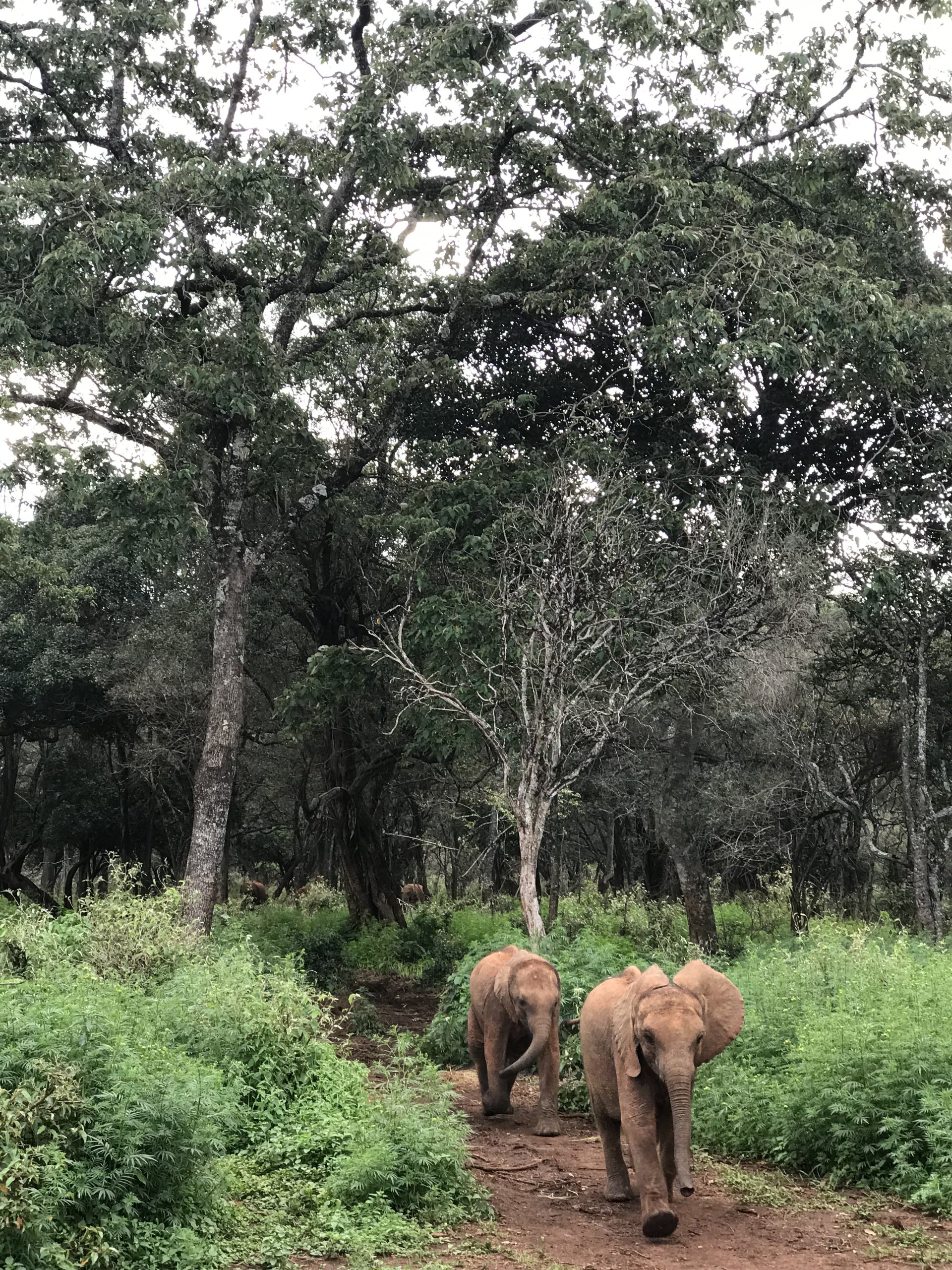
Sheldrick Wildlife Trust Elephant Nursery
The Sheldrick Wildlife Trust’s Nairobi Nursery sits inside Nairobi National Park, a short drive from the city, and it is where orphaned elephant calves begin a rehabilitation that will take most of a decade. It is not a zoo and it is not open all day. The public are admitted for one hour, between 11am and noon, by advance booking only.
What the Nairobi Nursery Actually Is
The nursery is the first stage of a rescue pipeline. Calves orphaned by poaching, drought, human conflict or accident are flown or driven to Nairobi and raised here on a milk formula, with keepers who stay with them day and night. When they are strong enough and old enough, they are moved to reintegration units in and around Tsavo, where they spend years learning to live with wild herds before leaving for good.
That sequence matters for what a visitor can expect. Every orphan here is being prepared to go back to the wild, so exposure to people is deliberately limited. Only keepers feed the elephants and only keepers handle them. Visitors stand behind a cordon. Some of the calves will come close, and some will not. Nothing about the hour is arranged so that members of the public can touch an elephant, and a description of the nursery as a petting experience is a description of somewhere else.
The trust itself was founded in 1977 by Daphne Sheldrick, in memory of her husband David Sheldrick, the founding warden of Tsavo East National Park. She was granted permission by the Kenyan government in 1978 to live inside Nairobi National Park and continue the work there. The Nairobi nursery dates from 1987 and the arrival of an infant elephant named Olmeg; the first two orphans raised here, Olmeg and Taru, went to the Voi reintegration unit in 1989. Daphne Sheldrick died in 2018 and her daughter Angela continues to run the organisation.
The Eleven O’Clock Visit
The public hour is built around the middle of the day, when the nursery herd comes out of the forest in groups for a bottle feed and then a mud bath. A senior keeper leads the session, introduces the orphans by name, explains how each one arrived, and takes questions at the end. The elephants wallow, wrestle, dust-bathe and generally do what young elephants do, which is the point of standing there.
The hour is fixed. It runs from 11am to noon every day except 25 December, and it is not extended or delayed for late arrivals. Guests are asked to arrive at or before 10.30am. Phones go on silent, there is no smoking or vaping, and photographs and video are for personal use only.
Two things are worth knowing before booking. Maxwell, the blind black rhino who lives at the nursery, cannot be visited during the public hour. And there is no cafe; there is a small shop selling trust merchandise and work by Kenyan artisans after the mud bath, but visitors are told to bring their own water and leave other food and drink at home.
Booking, and Why Some Visitors Are Turned Away
Access is by advance reservation made directly with the trust’s Nairobi office, by email. The booking needs the date, the number of adult and child tickets, the name of every adult and the name and age of every child. A confirmation email comes back and has to be brought along, printed or on a phone. Same-day bookings are not possible, and reservations are only accepted for dates within the next three months.
Only a booking confirmation issued by the Sheldrick Wildlife Trust is valid at the gate. The trust states plainly that it does not accept bookings made through third-party platforms, whatever those platforms advertise. Travellers who have arranged the visit through a tour operator or a guide should insist on being shown the trust’s own confirmation email before the day. This is the single most common way people lose the hour.
Daily capacity is limited, and payment is due for every ticket in a confirmed booking whether or not everyone turns up, so the trust asks visitors to book only the number they need.
Two Payments, at Two Different Points
Since 19 September 2023 the Kenya Wildlife Service has required everyone visiting the nursery to pay Nairobi National Park entry fees, whether or not they go any further into the park. That charge is entirely separate from the trust’s own entry donation, it is collected by KWS at the gate rather than by the trust, and KWS also charges for the driver and vehicle passing through. Park fees are payable through the eCitizen platform and paying them in advance is strongly advised, because the queue at the gate is what makes people late. The current park rates sit with the park itself rather than with the nursery.
The trust’s own minimum entry donations, published on its visiting page and checked in September 2026, are as follows. They are paid in cash on arrival at the nursery, after the KWS gate, and they are not pre-paid with the booking.
| Category | Non-resident | Kenya resident |
|---|---|---|
| Adult, 12 and over | US$20 | KSh 2,000 |
| Child, under 12 | US$5 | KSh 500 |
Kenya residents need proof of residency. The shilling equivalent of the dollar figures is taken at the day’s rate. Because a park entry fee now applies regardless, the trust suggests following the nursery hour with a game drive, which is a reasonable use of a ticket already bought.
Getting There
The nursery is reached through the KWS Mbagathi Gate, also known as the Workshop Gate, on Magadi Road. It is not the main park gate and it is worth naming it to a driver rather than saying “Nairobi National Park”. Visitors arriving by taxi or ride-hailing app should expect to be dropped at the gate unless park fees have also been paid for the driver and the vehicle; on foot, a trust vehicle runs between 10.15am and 11.30am to carry people the short distance to the nursery. Show the park entry ticket at the KWS customer service desk and staff will point out where it collects.
Rain matters here. The ground around the mud bath is exposed, hot in the sun and genuinely muddy during the March to May and October to December rains, so footwear should be chosen accordingly.
Nearby
The nursery pairs naturally with the Giraffe Centre and the Karen Blixen Museum, both in the same south-western quarter of the city, and with a morning or afternoon drive in Nairobi National Park itself. The wider context for a day spent this way is on the Nairobi guide, and the broader subject of visiting conservation projects is covered under wildlife conservation experiences.
Questions Visitors Ask
Can I feed or touch the elephants?
No. Only keepers feed and handle the orphans, because every one of them is being prepared for release and contact with people is deliberately restricted. Visitors watch from behind a cordon. Individual elephants sometimes come over of their own accord, but that is the elephant’s choice and not part of the programme.
Do I need to book in advance?
Yes, and directly with the trust’s Nairobi office. Same-day bookings are not accepted and nobody should travel out to the gate without a confirmation email. Allow at least two working days for a reply, and bookings are taken only for dates within three months.
Is a ticket bought through a booking site valid?
No. The trust states that it does not accept bookings from third-party platforms, and only its own confirmation email gets a visitor in. If a tour operator has arranged the visit, ask them for a copy of that email.
Why am I being asked to pay twice?
Because two organisations are involved. The Kenya Wildlife Service charges park entry at the gate, which has applied to nursery visitors since September 2023, and the trust collects its own entry donation at the nursery. They are separate payments, made at separate points, and paying one does not cover the other.
What time should I get there?
At or before 10.30am. The visit runs strictly from 11am to noon and cannot be held open, and the gate queue is unpredictable. Paying the park fee online beforehand removes most of the risk.
Can I see Maxwell the rhino?
Not during the public hour. He is blind and is kept away from the crowd.
11 Places to Visit in This Area
Other sites in Nairobi, each with its own guide.
Safaris That Visit Nairobi
3 of the 16 safaris listed here that visit Nairobi, from different operators where the listings allow it. Each is sold and run by an independent tour company. This site lists them and passes on enquiries; it takes no booking and charges you nothing.

12 Days Best of Kenya Safari
by Kori Safaris Verified operator
Operator quotes on request
View Safari

7-Day Fly-In Kenya Safari Package to Maasai Mara and Amboseli
by Insight Safari Holidays Verified operator
Operator quotes on request
View Safari

Kenya Classic: Amboseli, Tsavo & the Mara
by Ancient Africa Safaris Verified operator
From $9,400 per person
View Safari