
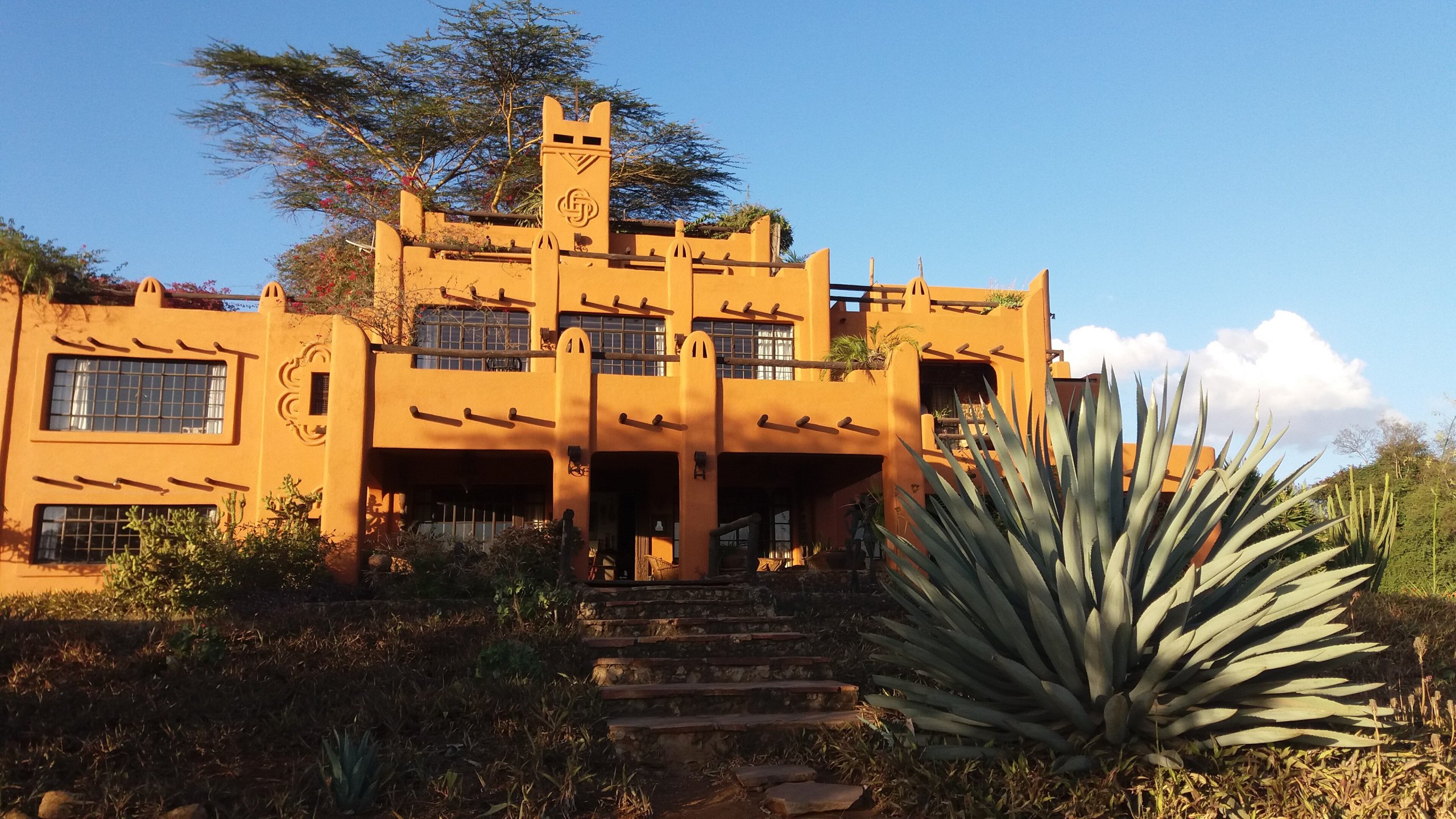
African Heritage House
African Heritage House stands on rising ground off Mombasa Road, looking across to Nairobi National Park, and it is a building rather than a museum in the ordinary sense. It was designed and built by the American-born collector Alan Donovan as a deliberate composite of African mud architecture, and it holds the collection he spent half a century assembling. Visits are by prior arrangement only.
What the House Is
The design borrows from several traditions at once. Its clearest debts are to the great mud mosques of Mali, in particular the Great Mosque of Djenné, and to the Swahili houses of the East African coast, and Donovan set out to combine the mud-built architectures of the continent in a single structure rather than reproduce any one of them. The result is a house that looks like it has been there for centuries and was in fact completed in the 1990s.
Inside, the rooms are furnished with the textiles, furniture, sculpture, jewellery and craft that Donovan collected from across Africa, arranged as a home rather than as a display. That is the essential difference between this and a gallery: nothing is behind glass and nothing is captioned, and the tour is a conversation about objects in the rooms they live in.
Alan Donovan and Joseph Murumbi
Donovan first came to the continent as a relief worker in the 1960s. In 1972 he founded African Heritage, a pan-African gallery, with Joseph Murumbi, Kenya’s second Vice-President and one of the most serious collectors of African art the continent has produced, and with Murumbi’s wife Sheila. That partnership is the origin of everything here, and it also connects this house directly to the Kenya National Archives on Moi Avenue, where the Murumbi collection is displayed in its own gallery. Seeing both in one trip makes considerably more sense of either.
Alan Donovan died on 5 December 2021, aged 83. The house was gazetted as a national monument under the National Museums and Heritage Act in 2016 and opened to the public, and it continues to receive visitors.
Visiting
This is not a walk-in attraction. The house sits behind a gate on private ground and arrangements have to be made in advance, after which someone comes to escort visitors in. Turning up unannounced does not work, and the approach off Mombasa Road is not obvious, so the escort is practical rather than ceremonial.
What is offered runs beyond a tour of the rooms. The house serves breakfast, lunch and dinner, on the rooftop or beside the pool, hosts conferences and functions, and takes overnight guests in rooms furnished from the same collection. A visit is therefore whatever is arranged in advance, from a short tour to a meal to a night’s stay.
No admission rate is published for the house and the arrangements differ by what is booked, so a figure should be agreed when the visit is arranged rather than assumed from a travel listing. Confirm at the same time that the house is open on the intended day, since it is a private property that also takes private functions.
Who It Suits
African Heritage House rewards people who are interested in African material culture, architecture or design, and it rewards them a great deal. It is a poor choice for anyone on a tight schedule wanting to tick off a museum, because the whole thing depends on time spent talking about what is in the rooms. It is also some way out of town on the Mombasa Road side, which means the journey has to be worth making in itself.
Nearby
The house looks over Nairobi National Park and is on the opposite side of it from the Lang’ata cluster, so it combines more easily with a park drive than with the Giraffe Centre or Bomas of Kenya. Its natural pairing is the Kenya National Archives for the rest of the Murumbi story. The city is covered on the Nairobi guide, and the wider subject under cultural tours.
Questions Visitors Ask
Can I just turn up?
No. Visits are arranged in advance and a member of staff comes out to escort visitors in from the road. The entrance is not obvious from Mombasa Road.
Is it a museum?
It is a gazetted national monument and a private house that opens to visitors, not a public museum with fixed galleries and opening hours. The collection is arranged as a home.
Can I stay the night?
Yes. The house takes overnight guests in rooms furnished from the collection, and also serves meals and hosts functions. All of it is arranged in advance.
What does it cost?
Nothing is published, because what is charged depends on whether the visit is a tour, a meal or a stay. Agree it when arranging the visit.
How does it relate to the Murumbi collection in town?
Alan Donovan founded the African Heritage gallery in 1972 with Joseph Murumbi and his wife Sheila. Murumbi’s own collection is displayed at the Kenya National Archives on Moi Avenue, and the two places tell two halves of one story.
11 Places to Visit in This Area
Other sites in Nairobi, each with its own guide.
Safaris That Visit Nairobi
3 of the 16 safaris listed here that visit Nairobi, from different operators where the listings allow it. Each is sold and run by an independent tour company. This site lists them and passes on enquiries; it takes no booking and charges you nothing.

12 Days Best of Kenya Safari
by Kori Safaris Verified operator
Operator quotes on request
View Safari

7-Day Fly-In Kenya Safari Package to Maasai Mara and Amboseli
by Insight Safari Holidays Verified operator
Operator quotes on request
View Safari

Kenya Classic: Amboseli, Tsavo & the Mara
by Ancient Africa Safaris Verified operator
From $9,400 per person
View Safari