
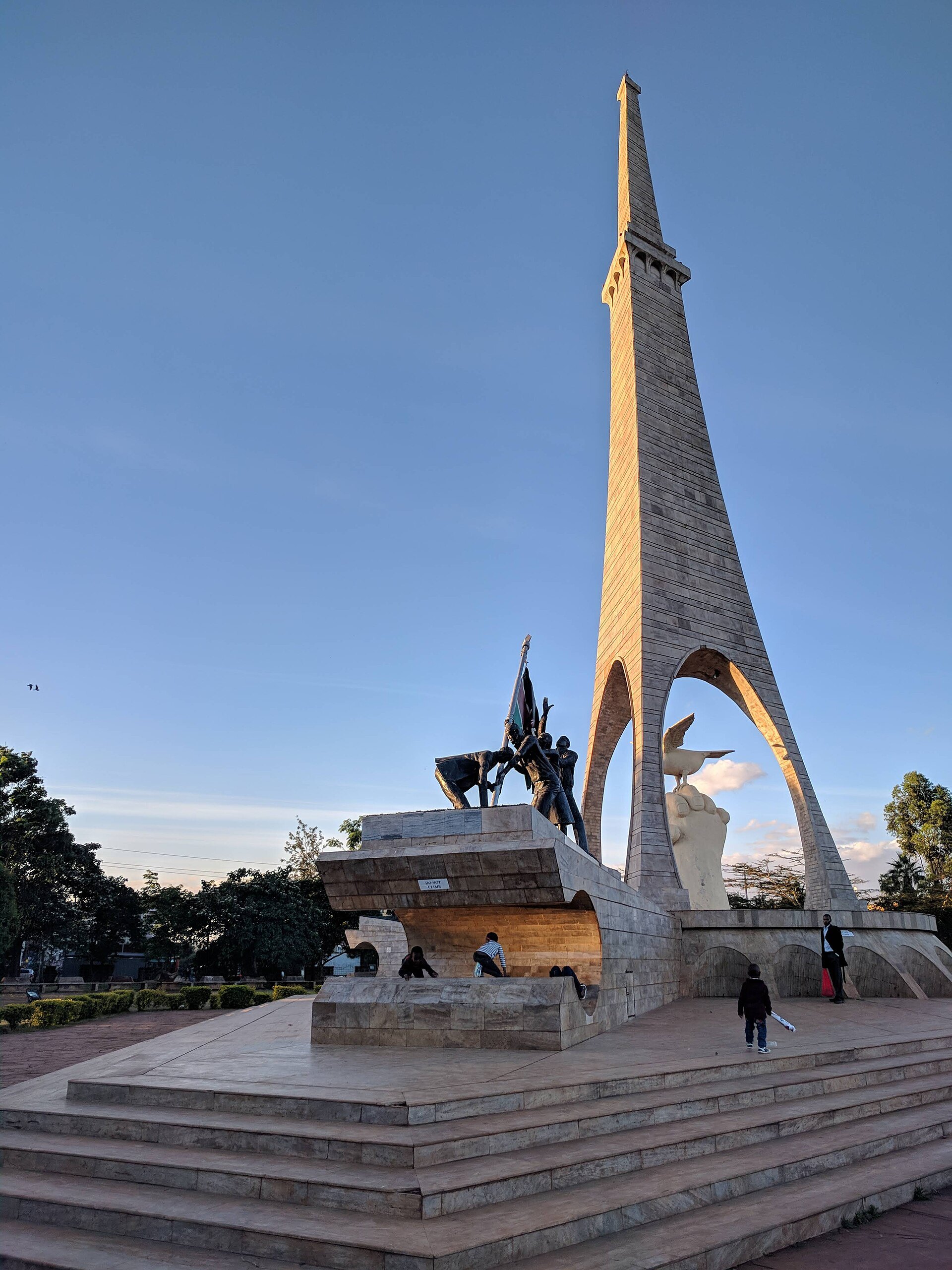
Uhuru Gardens
Uhuru Gardens on Lang’ata Road is the ground where the British flag came down and the Kenyan flag was raised for the first time on 12 December 1963. It has been a national monument since 1966, and since a rebuild by the Kenya Defence Forces it is no longer the neglected park it was for decades: it is now a monument and museum complex with a substantial set of galleries.
What Happened Here
Independence was declared on this site at midnight on 12 December 1963. That is the entire reason the place exists as a monument, and it is why it carries the name: uhuru is the Swahili word for freedom. The site was declared a national monument in 1966, three years after the event it commemorates.
For most of the following half century it was a park with monuments in it, used for national celebrations and otherwise quiet. Visitors who last saw it in that form, or who are reading a guidebook written before 2020, will not recognise the current site.
The Rebuild
The gardens closed in June 2020 and were redeveloped by the Kenya Defence Forces into a monument and museum complex. The site reopened on 12 December 2021, on Jamhuri Day, and the museum was formally presented and opened to the public during 2022. Government reporting at the time set out the scale: a project designed by Kenyans and built in 22 months, with 33 galleries planned, 16 of them complete by mid-2022 and the remainder programmed to follow.
The site covers roughly 68 acres, which makes it Kenya’s largest urban memorial park.
The Galleries
The completed galleries reported by the government at opening give a clear sense of what the museum is trying to do, which is to narrate the making of the country rather than to display a collection.
- The Struggle for Independence and the Independence Gallery, covering the road to 1963 and the moment itself.
- The Birth of Kenya gallery, on the constitutional and symbolic formation of the modern state.
- The Tunnel of Martyrs and the Hall of Witness, memorial spaces for those who died in the independence struggle.
- The Tomb of the Unknown Warrior, where visiting heads of state lay wreaths.
- A Military Heritage gallery, presenting Kenya Defence Forces equipment and history through the decades.
- Presidential galleries, including the Jomo Kenyatta Presidential Library and exhibitions on the Moi and Kibaki presidencies.
- The People of Kenya and Identity galleries, and the Plaza of the People.
The flag raised on the grounds in December 1963 is among the objects held here, along with founding constitutional material. Because the complex was still being completed after it opened, the number of galleries accessible on any given day has changed over time, and it is worth asking what is open when arranging a visit.
Practicalities
Entry to the monument grounds and the museum has been free since it opened, and no admission charge is published. Guided tours for schools and groups are arranged in advance, and there is parking on site.
Check before travelling. This is the national ceremonial ground as well as a museum, and it closes to the public around Jamhuri Day, Madaraka Day, Mashujaa Day and state occasions, sometimes for setup and rehearsal days either side. Arriving to find the gates shut for a ceremony is the most common way a visit here goes wrong. Confirm opening times on the day as well, since these have been reported inconsistently.
What to Expect
This is a state museum with a clear national narrative, presented in a building designed and delivered by the military. It is not a place that dwells on argument or ambiguity, and visitors interested in contested readings of the same period will find more of that at the Nairobi National Museum and in the documentary record at the Kenya National Archives. What Uhuru Gardens does better than anywhere else is scale and place: it is the actual ground, and the memorial spaces are genuinely affecting.
Allow two hours for the galleries and the grounds together, more if the presidential libraries are of interest.
Nearby
The gardens are on Lang’ata Road, which puts them on the route between the city and the Giraffe Centre, Bomas of Kenya and the Karen Blixen Museum, and close to Nairobi National Park. The city is covered on the Nairobi guide, and the wider subject under heritage tours.
Questions Visitors Ask
Is there an entry charge?
Entry to the monument grounds and museum has been free since it opened and no charge is published. Confirm before travelling.
Is this the same as Uhuru Park?
No. Uhuru Park is a separate public park closer to the city centre. Uhuru Gardens is the independence site on Lang’ata Road and is now a museum complex.
Why was it closed when I went?
Most likely a national ceremony. The site is the country’s ceremonial ground and closes to the public around Jamhuri Day, Madaraka Day, Mashujaa Day and state occasions, including preparation days.
How long does a visit take?
About two hours covers the main galleries and the grounds. Longer if the presidential galleries and the military heritage section are of interest.
Are all the galleries open?
The complex was planned with 33 galleries and opened with 16 complete, with the rest following. Ask what is accessible when arranging a visit, particularly for a group.
11 Places to Visit in This Area
Other sites in Nairobi, each with its own guide.
Safaris That Visit Nairobi
3 of the 16 safaris listed here that visit Nairobi, from different operators where the listings allow it. Each is sold and run by an independent tour company. This site lists them and passes on enquiries; it takes no booking and charges you nothing.

12 Days Best of Kenya Safari
by Kori Safaris Verified operator
Operator quotes on request
View Safari

7-Day Fly-In Kenya Safari Package to Maasai Mara and Amboseli
by Insight Safari Holidays Verified operator
Operator quotes on request
View Safari

Kenya Classic: Amboseli, Tsavo & the Mara
by Ancient Africa Safaris Verified operator
From $9,400 per person
View Safari