Giraffe Centre
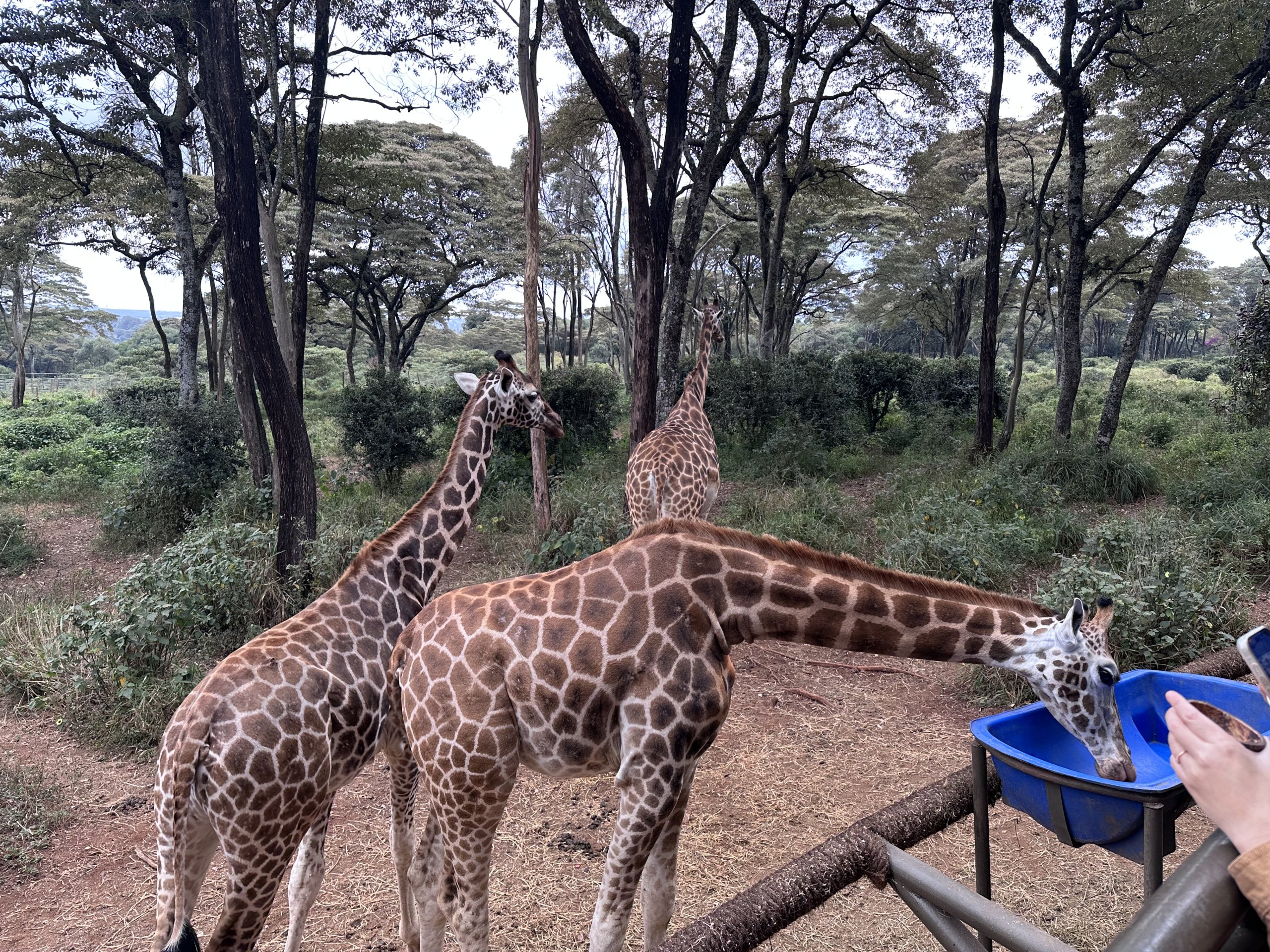
The Giraffe Centre in Lang’ata is a breeding and education project for the Rothschild’s giraffe, built around a raised wooden platform that brings a visitor level with a giraffe’s head. It is run by the African Fund for Endangered Wildlife, a Kenyan non-profit, and it exists mainly to teach Kenyan schoolchildren about their own wildlife. The feeding platform is what most visitors come for.
Why the Centre Exists
The African Fund for Endangered Wildlife, usually shortened to AFEW Kenya, was founded in 1979 by Jock Leslie-Melville, a Kenyan of British descent, and his American-born wife Betty Leslie-Melville. The subspecies they set out to save had run out of room. The Rothschild’s giraffe, which the centre also refers to by its other name, the Nubian giraffe, had lost its habitat in western Kenya, and by the late 1970s only about 130 animals remained on the 18,000-acre Soy Ranch, which was then being subdivided for resettlement.
The couple’s first move was small and domestic: they brought two young giraffes, Daisy and Marlon, to their own home in Lang’ata and raised them there. That garden is where the centre still stands. A captive breeding programme followed, and so did a series of translocations, moving breeding herds off Soy Ranch to safer ground. Groups went to what is now Ruma National Park in Homa Bay County, to Lake Nakuru National Park and to Nasolot in present-day West Pokot County. In 1985 seven giraffes were moved to a farm near the Mwea reserve in eastern Kenya. More recent herds have gone to Soysambu by Lake Elementaita, to Kigio Conservancy and to Sergoit Ranch in the Mount Elgon region.
The education centre itself was built in 1983, funded by AFEW’s American arm, on a 60-acre sanctuary. It opened to students and the public the same year and took in more than 800 schoolchildren in its first intake. AFEW states that over 300 Rothschild’s giraffe are now living and breeding in Kenyan national parks, and that more than 40 giraffe have been released from the centre’s programme into parks and reserves around the country. The giraffes currently in its care include a Daisy IV, born at the centre and named for the original Daisy.
What a Visit Involves
The centre is compact and a visit is self-directed. The core of it is the two-storey feeding platform, where staff hand out pellets and the giraffes come to take them. There is no queue system and no timed slot; people stay as long as they want to. Children and first-timers tend to need a few minutes before they are comfortable with how large and how deliberate a giraffe’s head is at close range.
Beyond the platform there is a nature sanctuary with a walking trail through indigenous forest, which is a genuinely good piece of urban birding and much quieter than the feeding deck. There is a tea house, and a gift shop stocked from a large number of Kenyan suppliers, with proceeds going back into the conservation and education work. Talks on Kenyan wildlife are given to groups.
The education programme is the part visitors see least of and the part AFEW exists for. Its stated mandate is environmental conservation and changing mindsets, and the bulk of its work is running Kenyan schoolchildren and their teachers through the sanctuary each year, which is why school groups are admitted free and why the site is laid out as a teaching facility with a lecture room rather than as a viewing attraction. A visitor arriving on a weekday morning will often find the platform shared with a school party, and that is the centre working as intended rather than an inconvenience.
The Giraffe Centre and the hotel next door are separate operations. The hotel is a private business with its own booking arrangements and its own giraffes at the breakfast table; paying to enter the centre does not give access to it, and the two are frequently confused before arrival. If the intention is the hotel, that is a different place with a different front door.
Admission and Opening
AFEW publishes its own rate card. The figures below were checked against the centre’s published rates in September 2026 and are in Kenya shillings.
| Category | Adult | Child, 3 to 12 |
|---|---|---|
| Non-resident | 1,500 | 750 |
| Resident | 400 | 200 |
Children under three are admitted free. The resident rate is not restricted to Kenyans: the centre applies it to citizens and work permit holders of any East African Community country, which it lists as Kenya, Uganda, Tanzania, Rwanda, Burundi, the Democratic Republic of Congo and South Sudan. School groups are admitted free if the visit is booked at least a week in advance, which is worth knowing for anyone travelling with a Kenyan school party.
The centre opens every day, including weekends and public holidays, and is generally open through the middle of the day from mid-morning to late afternoon. Exact opening and closing times are worth confirming before setting out, as is whether entry needs to be pre-booked, since the arrangement has changed in the past.
Getting There and When to Go
The centre is in Lang’ata, in the south-western suburbs, roughly 40 minutes from the city centre in ordinary traffic and considerably longer in rush hour. That distance is the main planning constraint, and it is the reason most visitors combine it with something else on the same side of town rather than making a separate trip.
Weekday mornings are the quietest. Weekends and Kenyan school holidays bring large family crowds and the platform gets busy, which is fine for atmosphere and less good for photographs. The giraffes are fed by visitors throughout the day, so there is no single best hour to arrive for animal activity; the timing decision is about crowds and traffic.
Nearby
The Sheldrick Wildlife Trust elephant nursery is close by and its public hour runs from 11am to noon, which makes the usual sequence nursery first, giraffes afterwards. The Karen Blixen Museum and Bomas of Kenya are also in this quarter, and Nairobi National Park is immediately south. The rest of the city is covered on the Nairobi guide.
Questions Visitors Ask
Can I feed the giraffes myself?
Yes. That is the point of the raised platform, and pellets are provided on site. The giraffes take food from an open hand at head height.
Do I need to book?
Entry has not normally required pre-booking, and visitors can turn up during opening hours. School groups do need to arrange their visit in advance, at least a week ahead, to qualify for free entry. Confirm the current arrangement before travelling.
Is the resident rate only for Kenyans?
No. The centre applies the resident rate to citizens and work permit holders of East African Community member states, not to Kenyan passport holders alone. Proof will be asked for.
How long should I allow?
An hour covers the feeding platform comfortably. Add another hour if the forest trail and the tea house are part of the plan, and add substantially more for the drive out and back.
What is a Rothschild’s giraffe?
It is the giraffe population that the centre breeds and releases, also called the Nubian giraffe. It had almost disappeared from western Kenya by the late 1970s, which is the reason the centre was started.
Is this the same as the hotel where giraffes come to the window?
No. The hotel is a separate private business on neighbouring land. A ticket to the centre does not include it.
11 Places to Visit in This Area
Other sites in Nairobi, each with its own guide.
Safaris That Visit Nairobi
3 of the 16 safaris listed here that visit Nairobi, from different operators where the listings allow it. Each is sold and run by an independent tour company. This site lists them and passes on enquiries; it takes no booking and charges you nothing.

12 Days Best of Kenya Safari
by Kori Safaris Verified operator
Operator quotes on request
View Safari

7-Day Fly-In Kenya Safari Package to Maasai Mara and Amboseli
by Insight Safari Holidays Verified operator
Operator quotes on request
View Safari

Kenya Classic: Amboseli, Tsavo & the Mara
by Ancient Africa Safaris Verified operator
From $9,400 per person
View Safari