
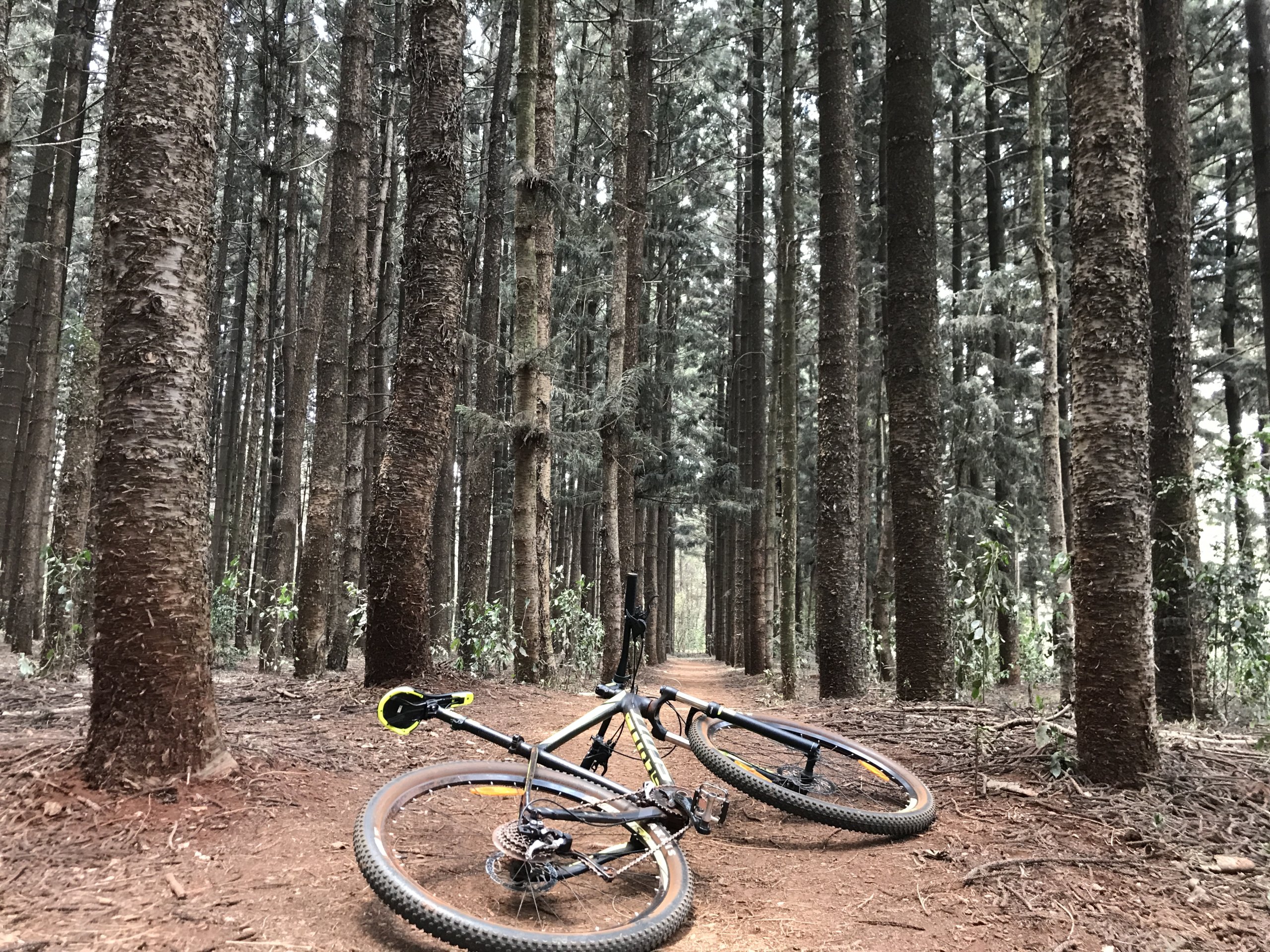
Karura Forest
Karura is a gazetted forest reserve of 1,041 hectares inside Nairobi, about 6 km north of the city centre, with marked trails, a waterfall, caves used by Mau Mau fighters, and a reputation as one of the most successful pieces of community forest management in Africa. It is run by the Kenya Forest Service jointly with the Friends of Karura Forest, and it is open every day.
A Forest That Was Nearly Lost
Karura is a surviving fragment of a belt of dry upland forest that once ran north around the Aberdares and Mount Kenya. Stone tools from caves here indicate hunter-gatherers lived in the forest for thousands of years, and potsherds and animal bones suggest pastoralists used the same caves later. Kikuyu cultivators cleared much of the surrounding land from the eighteenth century while keeping a protective belt of forest along the southern edge, and Karura is a remnant of it.
From the early 1900s the colonial administration took the forest for fuel and timber for the Uganda Railway, quarried it for building stone, and cleared parts of it outright for the suburbs that became Parklands and Muthaiga. The Forest Department replaced indigenous trees with fast-growing plantation species, and by 1932 indigenous vegetation made up only about a quarter of the reserve. Mau Mau fighters later used three caves by the Karura River.
The crisis came in 1998, when almost a third of the forest was secretly allocated to developers. In January 1999 demonstrators stormed the sites where bulldozers were working. Wangari Maathai, founder of the Green Belt Movement, led a group of women to plant trees there and they were badly beaten. The violence produced further protest and international condemnation, and the government abandoned the plan, though the title deeds were not revoked until 2017. The Kenya Forests Act of 2005 created the Kenya Forest Service and built in safeguards against irregular de-gazettement, and the Friends of Karura Forest was registered as a community forest association in 2009.
What followed is why the forest is usable today. The association raised private funding for an electric fence, forest scouts, gates, gatehouses, parking and rehabilitated trails, and by 2011 visitor revenue made the forest financially self-sufficient. Restoration replaced plantation blocks with indigenous species; indigenous cover passed 40 per cent by October 2019 and now stands at around 60 per cent.
What Is In There
The Kenya Forest Service describes Karura as holding nearly all of the 605 wildlife species recorded in Nairobi, including three kinds of antelope. Mammals include Harvey’s and common duiker, bushbuck, bush pig, genet, civet, bushbabies, porcupine and Sykes’s monkey. Around 200 bird species have been recorded, among them Ayres’s hawk-eagle, African crowned eagle, silvery-cheeked hornbill, Hartlaub’s turaco and Narina trogon, which makes it a serious birdwatching site for a place inside a capital city.
Plantation species still cover about 632 hectares and indigenous forest about 260, which is why walking Karura feels like several different forests. The features people walk to are the waterfall, the Mau Mau caves, Lily Lake, Amani Garden and Wangari Maathai’s Grove.
Trails, Gates and Activities
The trails are colour-coded by distance: yellow for 5 km, blue for 10 km and green for 15 km. The forest is used for walking, running, trail biking with bikes for hire, guided eco-tours, picnics at five designated sites, and dog walking. Dogs must be registered with the forest management, carry valid tags and current vaccination certificates, and be on a lead outside designated off-leash areas. There are tennis courts at the KFEET centre and an indigenous tree nursery near Amani Garden holding close to 100,000 seedlings.
Choose the gate before setting out, because they are far apart and a wrong choice means a long walk. Gate A is the main entrance on Limuru Road opposite the Belgian Embassy and gives road access to the KFEET centre and the forest office. Gate C, on Kiambu Road, is the one for biking and dog walking. Gate D is a pedestrian entrance off UN Avenue, and Gates E and F serve the smaller Sigiria block, which Limuru Road separates from the main forest.
Fees, Hours and Payment
Entry fees are set out in the official Karura fee notice issued by the Kenya Forest Service with the Friends of Karura Forest, with effect from 29 August 2025 and checked in September 2026. The figures are in Kenya shillings, include VAT and exclude the eCitizen platform charge.
| Daily entry | Citizen | Kenya and EAC resident | Non-resident |
|---|---|---|---|
| Adult | 116 | 232 | 696 |
| Child under 13 | 58 | 116 | 348 |
Car parking is charged separately, at 232 shillings for a car and more for minivans, minibuses and buses. Annual passes are sold for individuals, families, juniors, vehicles and dogs. Payment is by M-Pesa through eCitizen; cash is not accepted.
The forest is open daily. Tickets are valid for the date of issue from opening at 6.00am until closing at 6.00pm, the last entry ticket is sold at 5.30pm, and exit gates close by 7.00pm at the latest.
Nearby
Karura is on the northern side of the city, away from the Lang’ata cluster of attractions. It goes well with a morning in the centre or with the Nairobi National Museum, and it is the natural counterpart to Nairobi Arboretum, which is smaller, closer in and a shorter visit. Related activities sit under forest walks, cycling and running, and the city is covered on the Nairobi guide.
Questions Visitors Ask
Is Karura safe to walk alone?
The forest is fenced, gated and patrolled by forest scouts, and that security work is what turned it back into a public space after the 1990s. Stay on marked trails, and note that the last entry ticket is sold at 5.30pm.
Can I pay in cash at the gate?
No. Payment is by M-Pesa through the eCitizen platform. The published fees include VAT but not the eCitizen charge.
Which gate should I use?
Gate A on Limuru Road for the main forest, the KFEET centre and the office. Gate C on Kiambu Road for biking and dog walking. Gates E and F serve the separate Sigiria block.
Can I bring a dog?
Yes, with conditions. Dogs must be registered with the forest management, carry current vaccination certificates and valid Karura tags, and stay on a lead except in designated off-leash areas. A dog pass is sold annually.
How long is a visit?
The marked routes are 5, 10 and 15 km. Two hours covers the waterfall and caves on the shorter loop. A full morning is easy to fill.
Can I cycle there?
Yes, on designated trails, and trail bikes can be hired in the forest. Gate C is the usual entrance for cycling.
11 Places to Visit in This Area
Other sites in Nairobi, each with its own guide.
Safaris That Visit Nairobi
3 of the 16 safaris listed here that visit Nairobi, from different operators where the listings allow it. Each is sold and run by an independent tour company. This site lists them and passes on enquiries; it takes no booking and charges you nothing.

12 Days Best of Kenya Safari
by Kori Safaris Verified operator
Operator quotes on request
View Safari

7-Day Fly-In Kenya Safari Package to Maasai Mara and Amboseli
by Insight Safari Holidays Verified operator
Operator quotes on request
View Safari

Kenya Classic: Amboseli, Tsavo & the Mara
by Ancient Africa Safaris Verified operator
From $9,400 per person
View Safari