Jumba la Mtwana
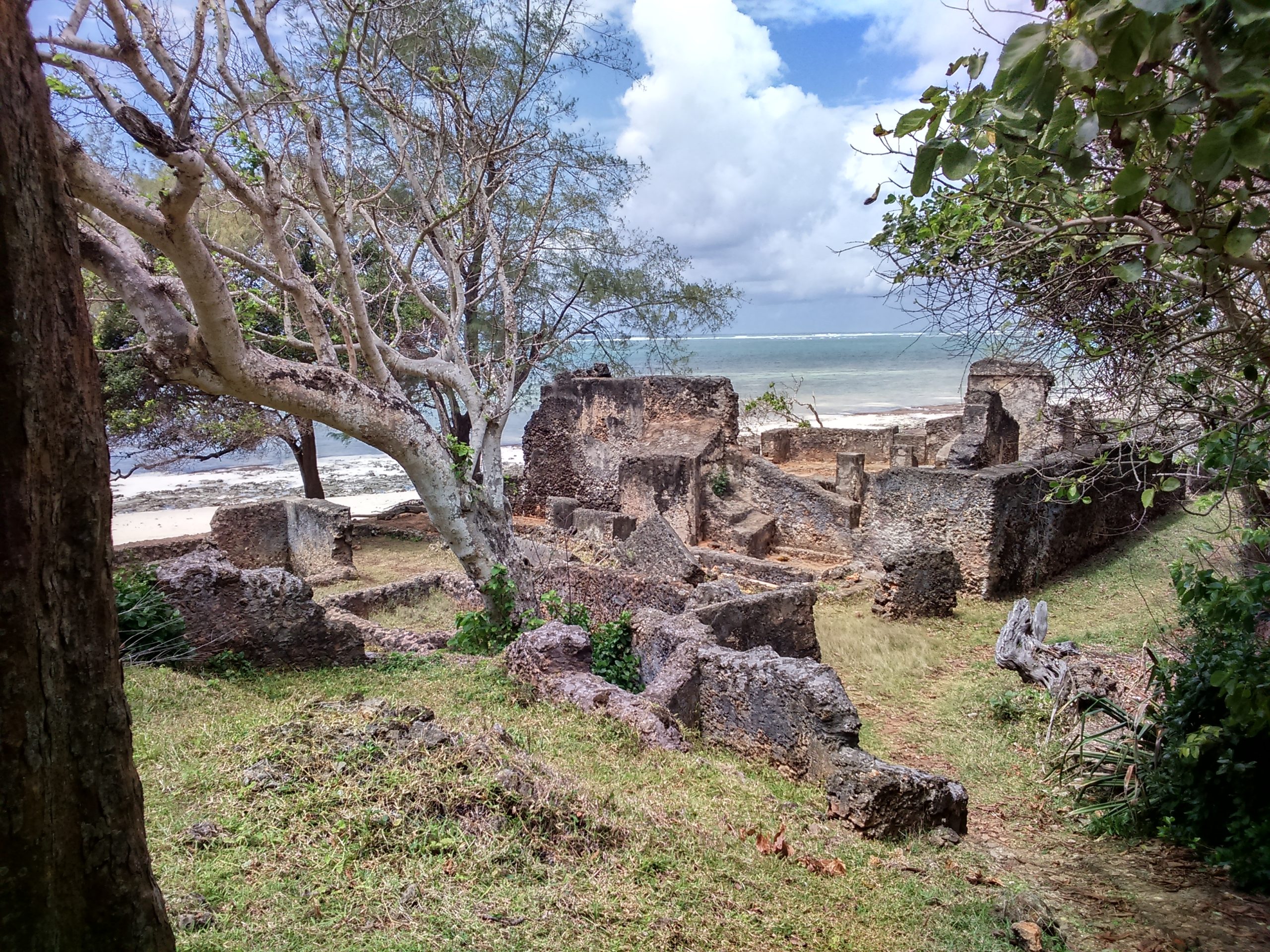
Jumba la Mtwana is a ruined Swahili town in a grove of baobabs and casuarinas directly above a beach north of Mtwapa. It was built in the fourteenth century, abandoned about a century later, and nobody knows why. It is one of the quietest major ruins on this coast, and the contrast with Gedi is the thing to hold in mind while walking it.
Where It Is and What the Name Means
The site lies roughly 15 kilometres north of Mombasa, about a kilometre north of the mouth of Mtwapa Creek and some four kilometres off the Mombasa to Malindi road, running about 300 metres along the shore and 250 metres inland. That puts it in Kilifi County rather than Mombasa County, though it is visited from Mombasa or the north coast beaches, which is why it is filed here.
The name is usually translated as the large house of the slave. It is a later Swahili name for a place whose own name is lost, and it should not be read as a description of what the town did. There are no written records of the settlement at all. Everything known about it comes out of the ground.
What the Archaeology Says
The dating rests on ceramics. Excavators found early blue and white porcelain alongside Longquan celadon and no later Chinese wares at all, which places the occupation in the fourteenth century and the abandonment early in the fifteenth. About a century of life, then nothing.
James Kirkman cleared and excavated the ruins in 1972, to date the buildings, establish the period of occupation and consolidate the structures closest to collapse. Ten years later the site was gazetted as a national monument under Gazette Notice 1515 of 4 June 1982, and it is managed by the National Museums of Kenya.
Why the town was sited here is reasonably clear: fresh water, the breezes that keep a coral-stone town cool, and safety from seaborne attack, because there is no harbour. Large vessels had to anchor well offshore or work into Mtwapa Creek. Why it was abandoned is not clear, and the National Museums of Kenya says so rather than inventing an answer: a break in trade, a hostile invasion or a failure of water supply are offered as possibilities and none is established.
What Survives
Four mosques, a tomb and four houses stand in recognisable condition, in coral rag with lime mortar. The houses carry descriptive names given by archaeologists, not historical ones.
- The Great Mosque. The principal congregational building, and the clearest surviving architecture on the site.
- The House of the Cylinder. Named for a feature found in it.
- The House of the Kitchen. Named for its surviving cooking area.
- The House of the Many Pools. Built in three phases, which makes it the most informative structure here about how a Swahili house grew over time.
The mosques are the evidence that matters. Their number and prominence establish that the inhabitants were predominantly Muslim, in a settlement without a single written source to say so. Around the standing buildings lie wall lines, wash and ablution areas and collapsed structures in the undergrowth, and the finds included pottery and glass beads pointing to the Indian Ocean trade.
Jumba la Mtwana and Gedi
Most visitors to the coast see one or the other and assume they are interchangeable. They are not. Gedi is larger, deeper in time, far more extensively excavated and interpreted, and was inscribed by UNESCO in 2024. It is also busy. Jumba is smaller, lightly interpreted and usually close to empty, and it has something Gedi does not: the sea. Gedi sits inland in dense forest; Jumba’s mosque looks straight out over the beach, and the relationship between a Swahili town and the water it lived on is legible here.
Choosing one, take Gedi for the archaeology and Jumba for the atmosphere. With time for both, do them in that order: Gedi supplies the context that makes Jumba’s fragments legible.
Visiting Jumba la Mtwana
The site is open daily including Sundays and public holidays. Its own listing gives 8am to 6pm; the 2026 fees notice gives general museum hours of 8.30am to 5.30pm. The two do not agree, so confirm which applies before travelling out to it.
Admission is fixed by the National Museums and Heritage (Admissions Fees) Regulations 2025, gazetted as Legal Notice 79 of 2025 and effective from 7 May 2026. Jumba, listed there as Jumba Ruins, sits in the standard ruins band alongside Gede, Mnarani and Takwa: KSh 200 adult and KSh 100 child for Kenyan and East African citizens, USD 6 and USD 3 for residents and other African nationals, and USD 8 and USD 4 for visitors from outside Africa. Checked on 21 September 2026. Ticketing is through eCitizen only and no cash is taken at the gate, so sort payment before arriving. An older and lower schedule is still hosted by the museums and still ranks in search; it has been superseded.
Guides on site are worth taking: the boards cover the basics, but the place rewards someone who can read a wall line. An hour to ninety minutes covers it. There are picnic spots under the trees and the beach below is public.
Coral rag is sharp and uneven, the ruins have no railings, and the midday heat on this coast is serious. Closed shoes, water, and the early morning or late afternoon rather than the middle of the day.
Jumba pairs with a north coast stay rather than a day on Mombasa Island. Archaeological tours in Kenya covers the wider Swahili ruins circuit, from Mnarani to Takwa, and the Mombasa guide has the transport.
Jumba la Mtwana Questions
How old is Jumba la Mtwana?
Ceramic evidence places it in the fourteenth century, with abandonment early in the fifteenth. There are no written records of the town, so the dating comes entirely from excavated material.
Why was the town abandoned?
Nobody knows. The National Museums of Kenya offers interruption of trade, hostile invasion or a failure of the water supply as possibilities without settling on one. Any confident explanation you are given on site is a guess.
Does the name mean it was a slave town?
No. The name is a later Swahili one, usually translated as the large house of the slave, attached to a site whose original name is unknown. It does not describe the settlement’s function, and no excavated evidence establishes one.
5 Places to Visit in This Area
Other sites in Mombasa, each with its own guide.
Safaris That Visit Mombasa
Every safari listed here that visits Mombasa. Each is sold and run by an independent tour company. This site lists them and passes on enquiries; it takes no booking and charges you nothing.
Open the full Mombasa listing