
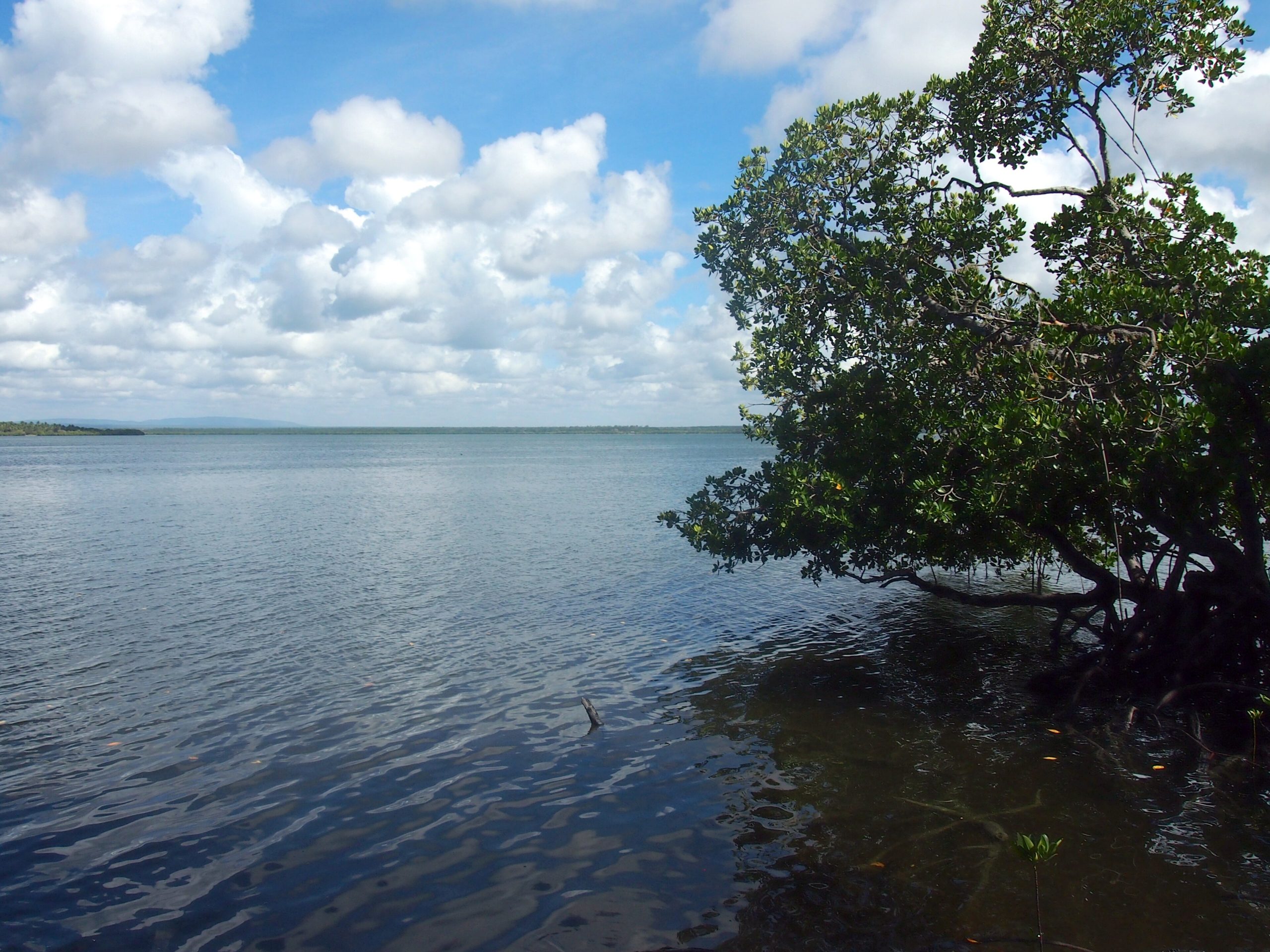
Mida Creek
Mida Creek is a tidal inlet that cuts inland from the sea just south of Watamu and runs back towards the edge of the coastal forest, so that mangrove, open mudflat and dry woodland sit within sight of one another. It is the single best place on the Kenyan coast to watch migratory waders, and it is also the most consistently mislabelled protected area in the country.
What Mida Creek Actually Is Protected As
Mida Creek is very widely described online as a Ramsar site. It is not one. Kenya’s coastal wetland listed under the Ramsar Convention is the Tana River Delta, added in 2012. The claim has been copied from page to page for years and appears even on otherwise careful sites.
The designations Mida does hold are real, and between them they do more work than the Ramsar label would.
- Watamu Marine National Reserve. The creek lies inside the wider reserve that surrounds the strictly protected marine national park, which is why controlled traditional fishing continues here. Kenya Wildlife Service, which gazetted the protected area in 1968 and manages it from Kilifi County, lists Mida Creek among its key attractions.
- Malindi Watamu Arabuko Sokoke Biosphere Reserve. Designated by UNESCO in 1979, covering 487,278 hectares across terrestrial, marine and coastal ecosystems.
- Important Bird Area. Recognised for the size of the migratory congregations it holds, not for a single rare species.
The fee and boundary position for the marine protected area itself belongs to Watamu Marine National Park. The creek is approached from the landward side at Dabaso, through community facilities rather than a Kenya Wildlife Service gate.
The Birds, and Why the Tide Decides Everything
Mida works because the tide exposes and then covers a very large area of soft mud twice a day. On the ebb, waders spread out across the flats to feed. On the flood they are pushed together onto shrinking ground, and on the biggest spring tides they abandon the creek altogether for beaches and rocky islets outside it.
The species that brings birders here is the crab plover, a heavy-billed black and white shorebird that breeds in the northern Indian Ocean, nests in burrows on the Somali coast and winters along East Africa. Mida is among the more reliable places in the world to find it, and it occurs here in numbers.
Between roughly September and May the creek fills with Palaearctic migrants: sanderling, curlew sandpiper, little stint, whimbrel, Terek sandpiper, grey plover, greenshank, and greater and lesser sand plovers. Dimorphic egret, lesser crested tern and roseate tern feed on the open water. Kenya Wildlife Service puts Mida Creek and neighbouring Whale Island together at over 200 species of local and migrant birds. Counts here have run into thousands of waders, and the sand plover numbers alone are of international importance.
The practical rule is simple and almost nobody follows it. Go on a falling tide, an hour or two after high water, when the mud is opening and the birds are close to the edge. A very high spring tide is the worst possible moment to arrive, and the middle of a hot still day is the second worst. The wider picture is in the birdwatching guide.
The Mangroves
Nine mangrove species grow in the western Indian Ocean and Nature Kenya records eight of them at Mida, which is what makes the creek unusual rather than merely pleasant. The forest is arranged in bands: the species tolerant of permanent immersion on the seaward margin, stilt-rooted Rhizophora behind them, then the belts that prefer firmer and less salty ground towards the land.
That arrangement is the most rewarding thing a guide can point out, because once it has been named it is visible everywhere. Below the trees the mud carries fiddler crabs signalling with one oversized claw, mudskippers, and the juvenile fish and prawns that use the root system as a nursery and end up in the fishery outside. Parrotfish, rabbitfish, snapper, grouper, emperor, jacks and barracuda all use the channels at some stage.
The mangrove tours guide covers how Kenya’s mangrove forests are distributed and why the ones visitors walk into are not the largest ones.
The Boardwalk and the Bird Hide at Dabaso
The creek is reached from the village of Dabaso, where community conservation groups have built a suspended boardwalk out over the mangrove, ending in a rustic bird hide and opening to the water. It is a few hundred metres long, it flexes and swings as you walk it, and it puts a visitor inside the canopy rather than looking at it from a bank.
The same groups run a seafood kitchen on stilts over the water, with crab from their own sustainable farming project and fish landed by creek fishermen, and the income supports conservation and education work. The Mida Creek Conservation and Awareness Group is the recognised Site Support Group for the area, working with Nature Kenya on monitoring, mangrove replanting and awareness work, and it also runs boat trips.
Walking the boardwalk is easier at low water, when the structure sits above open mud and the light is better for photographs. Carry water. There is no shade to speak of at the far end.
Canoes, Paddleboards and the Sunset Question
The other way onto the creek is on the water. Dugout canoe and kayak trips work through the mangrove channels and must be timed to the tide, because the channels drain; a guide who tells you the departure time is set by the moon rather than by the clock is telling you the truth. Stand-up paddling at first light is the calmest version of the same thing, with the water flat and the herons working the margins.
Sunset over Mida has become the standard evening outing from Watamu, and it is genuinely good. It is also the point in the day when the birds are least visible and the boardwalk is busiest. Two visits at different states of the tide are worth more than one long one, and they are not the same outing at all.
Getting to Mida Creek
The creek lies immediately south of Watamu village, and the Dabaso approach is a short drive or tuk-tuk ride from anywhere in Watamu. Coming from Malindi, it is the far side of the Gede junction. The entrance to Arabuko Sokoke Forest is less than a kilometre from the creek, which is why the forest and the creek are so often walked on the same morning.
The community facilities charge for access to the boardwalk and for guiding, and the rates are not published anywhere reliable, so ask at the entrance. Payments here stay in the village and fund the conservation work, which is a better argument for paying them cheerfully than any price list would be.
Questions Travellers Ask About Mida Creek
Is Mida Creek a Ramsar site?
No, although the claim is everywhere. Mida Creek sits inside the Watamu Marine National Reserve and the Malindi Watamu Arabuko Sokoke Biosphere Reserve, and it is an Important Bird Area. Kenya’s coastal Ramsar listing is the Tana River Delta, designated in 2012.
What is the best time of day to visit?
For birds, a falling tide in the early morning or late afternoon. For the boardwalk and photographs, low water. For the view, sunset. These are three different visits and the creek rewards more than one.
What is the best time of year?
Roughly September to May, when the Palaearctic migrants are present. Numbers build through the northern winter. Outside that window the creek is still worth walking for the mangroves and the resident birds, but the wader spectacle is gone.
How many mangrove species grow at Mida?
Nature Kenya records eight of the nine species found in the region, which is exceptional for a single creek. Sources do differ: Kenya Forest Service material for the neighbouring forest gives six. The higher figure comes from the organisation that monitors the creek directly.
Can you swim in the creek?
People do at the deeper channels near the mouth, but the current through the narrows on a changing tide is strong and the water is muddy on the ebb. Ask locally rather than judging it from the bank, and treat the flats as walking ground rather than swimming ground.
Is the boardwalk suitable for children or anyone unsteady?
It is a suspended walkway that moves underfoot, with handrails, and most children find that the best part of it. Anyone worried about balance should take it slowly and go at low water, when the drop below is short.
Do you need a permit or a Kenya Wildlife Service ticket?
Not for the boardwalk and the community facilities, which are approached from the land at Dabaso and charge their own access fee. A Kenya Wildlife Service conservation fee applies to the marine national park out at the reef, which is a separate place with a separate gate rule.
4 Places to Visit in This Area
Other sites in Watamu, each with its own guide.
No operator on the marketplace currently lists a safari to Watamu.
See every Kenya safari