
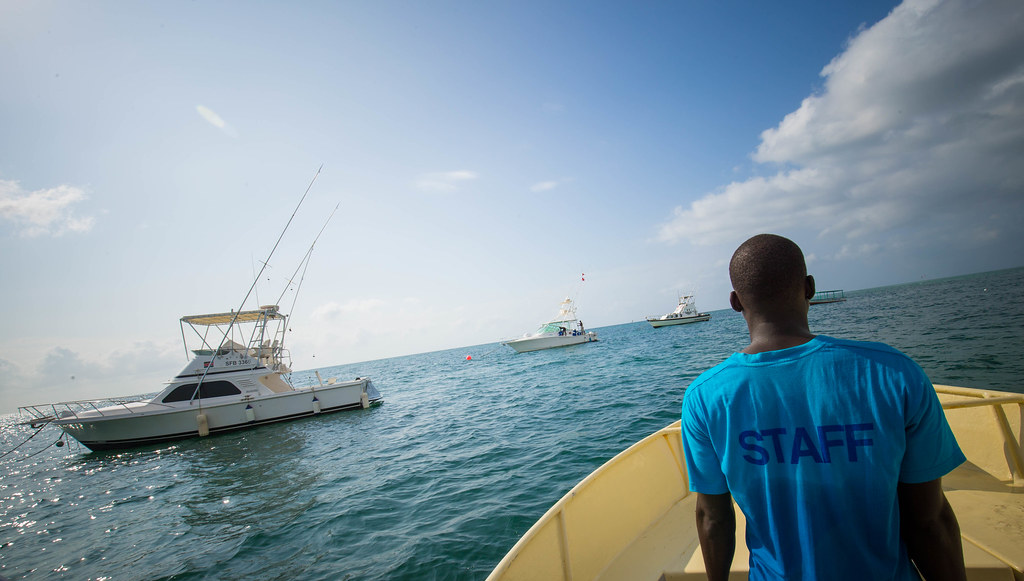
Watamu
Watamu is a small village on a headland about 105 kilometres north of Mombasa and roughly 20 kilometres south of Malindi, built around three bays and one of the oldest protected reefs in Africa. Most visitors come for the water and stay inside a twenty minute radius. It sits inside a UNESCO biosphere reserve that covers the reef, the creek and the forest behind it, which is what separates Watamu from every other beach village on this coast.
Where Watamu Sits and Why the Protection Matters
Four designations stacked on one headland is not decoration. It is the reason the coral in front of Watamu is in the condition it is in, the reason the mangrove behind it has not been cut for building poles, and the reason a forest that would otherwise have gone to farmland still holds birds found nowhere else on earth.
UNESCO’s own description of the biosphere reserve notes that it carries the widest range of mangrove species on the East African coast, that its seagrass beds work as nursery ground, and that the area lies on cetacean migration routes. That is a lot of ecology for a village you can walk across.
The practical effect for a visitor is that access is regulated. Kenya Wildlife Service manages the marine park, which means the water in front of the main beaches is a park with a gate, although the gate is not a physical one. Travellers are regularly caught out by this, because the rule applies whether you go out on a boat or simply walk into the sea from the sand.
The Bays, the Headland and the Reef
Watamu sits on a small headland between Blue Lagoon and Watamu Bay, with Turtle Bay, Garoda, Ocean Breeze and Jacaranda strung along the coast either side. The bays are separated by low coral outcrops that stand out of the water at low tide and look like mushrooms, which is what most photographs of Watamu are actually showing.
Because the bays face different directions and sit at different points on the reef, they behave differently. Garoda has a reputation for staying clear of the seaweed that reaches other stretches, and it picks up enough wind at high tide for kitesurfing. Blue Lagoon is the sheltered one. The main Watamu beach is where the turtles come ashore.
The reef sits close in, and what is inside it is a shallow lagoon that drains hard at low tide, the same pattern as the rest of this coast. Check the tide on arrival. The difference between a Watamu morning and a Watamu afternoon is sometimes the difference between a swimming pool and a mudflat.
The reef and the water are a destination in their own right, with their own rules, boundaries and fee. That is Watamu Marine National Park.
Mida Creek Tours by Canoe and Boardwalk
Mida Creek cuts inland from the sea just south of Watamu and runs back towards the edge of Arabuko Sokoke, which puts mangrove, mudflat and dry forest within sight of each other. At high tide it is a wide sheet of water. At low tide it is exposed mud, and that mud is why the birds are there.
A Mida Creek tour is usually one of three things. A dugout canoe or kayak paddle through the mangrove channels, timed to the tide. A walk on the community boardwalk at Dabaso, built out over the mangrove by a local conservation group. Or a stand up paddleboard session at first light, when the water is glass and the herons are working the edges.
The numbers are the point. Waterbird counts at Mida have recorded over 8,000 waders, and the creek holds crab plovers in numbers exceeding a thousand, which is what makes the site internationally important rather than merely pleasant. Greater and lesser sand plover populations here are also of international importance. Sanderling, curlew sandpiper, little stint, Terek sandpiper, whimbrel, grey plover and greenshank are among the regular migrants. Eight of the nine East African mangrove species grow in the creek.
Bring binoculars and go on a falling tide, when the birds concentrate on the exposed flats. A Rocha Kenya has been counting waterbirds here for decades, so the local guides know where the roosts are.
The full account is at Mida Creek.
Arabuko Sokoke Forest Birding Trips
Behind Watamu and Mida Creek lies about 420 square kilometres of coastal forest, the largest surviving block of its kind in East Africa. Arabuko Sokoke Forest is the reason serious birders come to this stretch of coast at all, and it is a very different day out from the reef.
The forest holds six globally threatened bird species: Clarke’s Weaver, Sokoke Scops Owl, Amani Sunbird, East Coast Akalat, Spotted Ground Thrush and Sokoke Pipit. Clarke’s Weaver is found only here and in one area of Dakatcha woodland to the north, and nowhere else in the world; the only breeding colony ever recorded is at Dakatcha, not in Arabuko Sokoke itself. On the mammal side the forest holds the golden-rumped elephant shrew, the Sokoke bushy-tailed mongoose and Ader’s duiker, all three globally threatened. Roughly a fifth of Kenya’s bird species and around a third of its butterflies have been recorded here.
Go with a guide. The forest is divided into distinct habitat types, the birds are tied to specific ones, and finding the Sokoke Scops Owl in cynometra thicket at dawn is not something you improvise. Nothing is guaranteed on any single visit.
Bio-Ken Snake Farm Tours
Bio-Ken Snake Farm is not a roadside attraction with a python round your neck. It is a working research and venom facility, founded in 1980 by the herpetologist James Ashe and his wife Sanda, and it is the facility in East Africa that collects venom for antivenom production. A spitting cobra species, Naja ashei, is named for Ashe. After his death the James Ashe Antivenom Trust was set up to make antivenom available free to snakebite victims who would otherwise go untreated.
The visit is a guided tour of the collection with someone who handles these animals for a living, which is a genuinely useful hour if you are going to be walking in the forest. It also runs a snake removal service for the surrounding area, which tells you something about how Watamu and its wildlife actually coexist.
Sea Turtle Watching and the Local Ocean Work
Green, hawksbill and olive ridley turtles nest on Watamu’s beaches, with the main nesting period running from around April through to October. Green turtles are the most frequent nesters here.
Local Ocean Conservation, started by Watamu residents in 1997, runs the work around them. Its Bycatch Release Programme pays and persuades local fishermen to release turtles caught accidentally in nets rather than kill them, and the crew has logged many thousands of releases over the life of the programme, with the recorded data feeding research on turtle movement and health. There is a rehabilitation centre for sick and injured animals, and a nest monitoring and protection programme on the beaches.
Turtle watching at Watamu is mostly about the centre rather than the beach. Nesting happens at night, on a schedule nobody controls, and sitting on a beach hoping is not the way this works. Visit the rehabilitation centre, understand the programme, and if a release or a hatching happens while you are there, that is luck rather than an itinerary item.
Water Sports and Reef Trips from Watamu
Watamu’s reef is widely rated among the best in East Africa for snorkelling and scuba diving, and both have their own pages here rather than being written out again. What matters at destination level is the access rule and the timing.
The access rule: a Kenya Wildlife Service permit covers entry to the marine park, and it is required even if you walk into the water from the beach. Reef operators normally handle it, but if you are swimming out on your own you are responsible for it.
The timing: reef visibility follows the monsoons, not the calendar. The rains in March to May and again in October and November push sediment out and drop visibility. Kitesurfing works off Garoda at high tide, deep sea fishing boats work the drop-off, and dolphin watching trips run out of the bays, though no sighting is ever promised.
Gedi Ruins Tours Inland from Watamu
Six and a half kilometres inland from the coast, in a surviving patch of the same coastal forest, stand the walls of a Swahili town that was abandoned and left largely untouched. Gedi Ruins was inscribed on the UNESCO World Heritage List in 2024 as The Historic Town and Archaeological Site of Gedi, under criteria two, three and four, with a property area of 20.81 hectares and a buffer zone of 22.61 hectares.
Gedi was one of the most densely populated Swahili cities on this coast between the tenth and seventeenth centuries, with two rings of walls, a grid of streets, a palace complex, a Grand Mosque, tombs inset with Chinese porcelain and a water engineering system that can still be read on the ground. Chinese, Persian, Indian and Venetian goods have been excavated there.
It is the strongest single reason to leave the beach at Watamu, and it has enough independent pull that it gets its own page rather than a paragraph here.
Watamu or Malindi: Which Base Suits Your Trip
The two sit about twenty kilometres apart and travellers ask this constantly, so it is worth answering plainly rather than pretending they are interchangeable.
Watamu is a village organised around protected nature. It is quiet, it is small, the beaches are the cleaner of the two, and almost everything on offer is reef, creek, forest or turtle. If the holiday is built around what is in the water and in the trees, this is the base.
Malindi is a working coastal town with five centuries of layered history, a market, an airport, restaurants, nightlife and a Portuguese and Italian inheritance you can walk through. If the holiday wants a town around it, or wants heritage and a dry inland excursion, that is the base.
Plenty of people stay in one and day trip to the other. The two pages here are written for two different travellers rather than as rival versions of the same coast.
Getting to Watamu for a Coast Trip
The nearest airport is Malindi, a short drive north, with scheduled flights from Nairobi and Mombasa. Mombasa’s Moi International Airport is the bigger option and is roughly two hours away by road on the Mombasa to Malindi highway.
By road from Mombasa, the turn for Watamu leaves the main highway at Gede, and it is about 11 kilometres from there down to the ocean. That junction is also how you reach Gedi Ruins, which is why the two are so often done on the same day.
Within Watamu itself, distances are short enough to walk, cycle or take a tuk tuk, and most visitors never use a car after arrival.
Timing a Watamu Trip Around the Monsoons
Match the window to the reason for the trip. Reef trips want kaskazi. Turtle nesting runs through the kusi months. Birding in Arabuko Sokoke and on Mida Creek peaks when the northern migrants are in, which is the kaskazi window again. Wind sports want kusi.
Watamu Questions
What does it cost to enter Watamu Marine National Park?
Kenya Wildlife Service sets one conservation fee band for all six of its marine protected areas, covering Watamu alongside Kisite Mpunguti, Mombasa, Malindi, Kiunga and Diani Chale. On the KWS conservation fee schedule current at the time of checking on 21 September 2026, the band is KSh 500 for an East African citizen adult and KSh 250 for a child, KSh 675 for a Kenya resident adult and KSh 350 for a child, USD 25 for a non-resident adult and USD 15 for a child, and USD 15 for an African citizen adult and USD 10 for a child. Gates run from 6:00 to 18:00. Confirm on kws.go.ke before travelling, since fee schedules are revised.
Do you need a permit just to swim from the beach?
If you are entering the water inside the marine national park, yes. The permit requirement covers shore entry and boat trips alike, and it catches people out because there is no gate to walk through. Reef and boat operators usually include it. If you are swimming out independently, sort it yourself.
Which Watamu beach is best if seaweed is a concern?
Garoda has the strongest reputation for staying clear of it. Seaweed on this coast is driven by current and wind direction rather than by a single season, so it varies by bay and by week. The rains in April and May tend to bring more of it everywhere.
Is Watamu good for children?
The sheltered bays, short distances and calm high tide lagoon suit families, and the conservation work at Local Ocean and Bio-Ken gives children something to do that is not another beach. The low tide drain and the reef flat need the same footwear caution as elsewhere on this coast.
How long do you need in Watamu?
Three to four nights covers the reef, Mida Creek, Gedi and one of the conservation centres without rushing. A week suits anyone adding Arabuko Sokoke birding, which wants early starts on more than one day, or anyone treating the place as a straight beach stay.
Can you see turtles nesting or hatching?
Not on demand. Nesting happens at night between roughly April and October and hatching is unpredictable. Local Ocean Conservation’s rehabilitation centre is the reliable way to see turtles and understand the work; a nesting or hatching is a matter of luck.
What is the difference between the marine park and the marine reserve?
The park is the strictly protected no-take core, around 10 square kilometres. The reserve is the wider surrounding area, including Mida Creek, where controlled use such as traditional fishing is allowed. Both are managed by Kenya Wildlife Service and both sit inside the biosphere reserve.
Is Mida Creek a Ramsar site?
No. Kenya’s Ramsar listed wetlands do not include Mida Creek. It is protected as part of the Watamu Marine National Reserve and the UNESCO biosphere reserve, and it is recognised as an Important Bird Area. The Ramsar label is sometimes applied to it by mistake.
Watamu is one of a run of north coast destinations that includes Malindi, Kilifi and Mombasa. For the coast as a whole, start at Kenya Coast.
5 Places to Visit in This Area
Individual sites within reach of here, each with its own guide. Some are written up because the name circulates and the place does not, which is worth knowing before you plan a drive around one.
No operator on the marketplace currently lists a safari to Watamu.
See every Kenya safari