
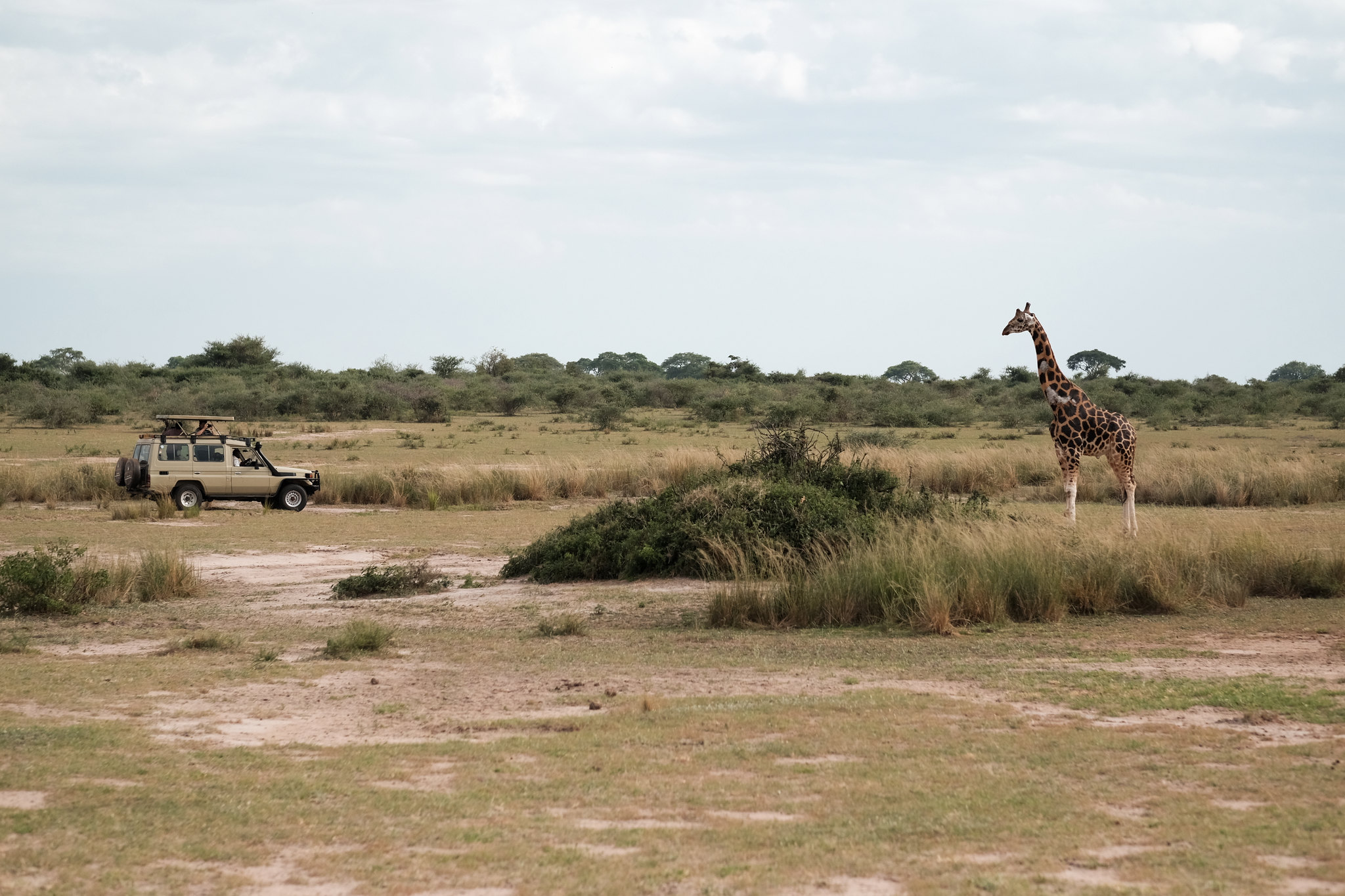
Almost every itinerary describes the same day: morning game drive, lunch at the camp, afternoon game drive. It is accurate and it explains nothing. The shape of a safari day is not a preference or a house style — it is forced on everyone by three things that have nothing to do with what travellers would choose: when animals move, when the light works, and when the gates open and shut.
Understanding why the day is built the way it is makes several planning decisions obvious that otherwise look like upselling.
Before dawn
The wake-up is usually somewhere between 5:15 and 5:45, delivered by a voice outside the tent and a tray of coffee. It is cold — the Mara sits at roughly 1,500 to 1,800 metres and the highland parks higher still, and an open vehicle at 6am in the dry season is genuinely cold in a way that surprises people who packed for the equator.
The reason for the hour is administrative as much as natural. Kenya Wildlife Service gates open at 6:00 and close at 18:00, so a camp outside a park cannot put a vehicle on a track before six however early it wakes you. A camp inside the park is already there. That single fact is most of the argument for staying inside, and it is worth more than the room.
The first three hours
This is the part of the day that decides what you see. Predators have been active overnight and are still moving, still finishing a kill, still walking a track because it is easier than the grass. By nine the same animals are lying in shade and are, for viewing purposes, furniture.
The light is doing the same thing on a parallel schedule: low, warm and directional for the first ninety minutes, then flat and contrast-heavy. If photography matters to you at all, the trip has roughly three usable hours a day, and losing the first of them to a late departure costs a third of them.
Somewhere around eight or nine the vehicle stops for breakfast out of a box, usually somewhere with a view and a reason to be confident nothing is close by. Then the drive turns for camp, and the drive back is not dead time — late morning is when elephants walk to water.
Why the middle of the day disappears
Between roughly eleven and half past three, very little happens that is worth being out in. Animals shade up, the light is at its worst, and the heat inside a vehicle on a black-cotton track is considerable. So the day has a hole in it, and camps have built their whole rhythm around that hole: lunch, laundry back the same afternoon, a swim if there is a pool, and a couple of hours in which most people discover they are more tired than they expected.
Travellers on a first safari often read this gap as waste and ask for a full day out. There are two situations where that is the right call and they are worth knowing, because they are the exceptions rather than the default. The first is a day that has to cover ground anyway, where a picnic box and a long circuit replace a transfer. The second is the migration: a river crossing cannot be scheduled, and if the herds are massed on a bank, the hole in the middle of the day is exactly where you want to be sitting. The guide to planning a migration safari goes into how differently those days have to be planned.
The afternoon drive, and the 18:00 rule
The second drive leaves around half past three or four and runs until the gate time. Gates close at 18:00 and visitors must be out by dusk unless they are staying overnight inside, which means the drive turns for home before the best light of the evening arrives — and then arrives back at camp as it does.
This is the other half of the inside-or-outside argument. A camp inside the park can still be driving as the light goes. A camp outside has to be through the gate, and the last forty minutes of its afternoon drive are spent getting there. Over five nights that difference is most of an extra day.
Night drives are the exception to the whole structure, and where they are available they are one of the best things on a Kenyan itinerary: genets, civets, white-tailed mongoose, sometimes a leopard hunting. But they are not available everywhere, because national park rules generally do not allow driving after dark. Conservancies are the usual answer — they set their own rules on their own land, which is why an itinerary that includes night drives is usually an itinerary that includes a conservancy such as Mara North or Ol Pejeta.
The rules you are driving inside
Four rules apply across the KWS estate and they shape what a guide can and cannot do, which is worth knowing before you ask for something they will have to refuse:
- The speed limit in parks is 40 kilometres an hour.
- Off-road driving is prohibited. The vehicle stays on tracks, which is why a sighting fifty metres into the grass stays at fifty metres.
- Wildlife is viewed from a minimum of 20 metres.
- Single-use plastic is banned across the KWS estate.
Conservancies are the reason these rules come up in conversation at all. Because the land is leased rather than gazetted, many of them permit controlled off-road driving and limit the number of vehicles at a sighting — and that, rather than the tents, is what people are describing when they say a conservancy felt different. In the reserve you may share a cheetah with twenty vehicles at a legal distance; in the conservancy next door, five vehicles may be the cap and you may be allowed to leave the track.
The days that are not game drives
A week of nothing but drives is a lot of sitting down, and the alternatives are mostly tied to the same clock.
Walking safaris go out at first light with an armed ranger or an armed professional guide and cover very little ground on purpose: they are for tracks, dung, birds, ants and the smell of the place rather than for big animals, and they are the antidote to five days behind glass. Balloon flights launch before sunrise because that is when the air is stable, and land in time for the morning still to be young. Boat trips on Lake Naivasha and the Rift lakes work in the early morning or late afternoon for the same light and wind reasons as everything else. Cultural visits are usually mid-morning or mid-afternoon, and sit comfortably in the part of the day the animals have abandoned.
What this means when you are choosing
Three decisions follow from the shape of the day rather than from anybody’s sales pitch. Stay inside a park or a conservancy rather than outside a gate, if the budget stretches, because the gate times are what you are buying. Give each place at least two nights, so that at least one full morning is not spent arriving. And if the first three hours matter to you more than anything else on the trip, that is the argument for a private vehicle — not comfort, but the right to be out at six and to stay when something is happening.
The guide to how many days you need and the one on when to visit take those two questions further.