
Night Game Drives in Kenya
Most of Africa’s larger mammals are nocturnal or crepuscular, so an ordinary safari bounded by daylight never meets them. A night game drive is the only way to close that gap, and in Kenya it is the activity most tightly constrained by where a camp happens to sit.
Most of Africa's larger mammals are nocturnal or crepuscular, so an ordinary safari bounded by daylight never meets them. A night game drive is the only way to close that gap, and in Kenya it is the activity most tightly constrained by where a camp happens to sit.
Safaris That Include Night Game Drives
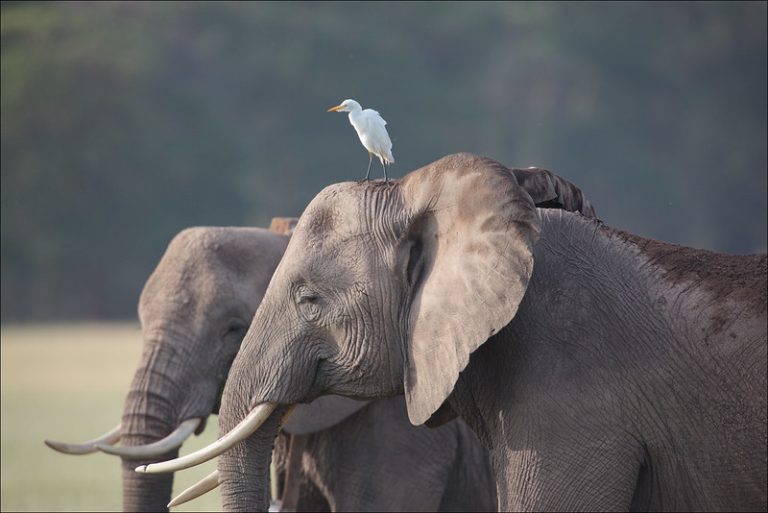

3 Day Safari Amboseli Kenya
by Insight Safari Holidays Verified operator
Operator quotes on request
View Safari

Laikipia Rhino Conservancies & Samburu
by Ancient Africa Safaris Verified operator
From $6,000 per person
View Safari

3 Day Masai Mara Safari
by Wild Whispers Africa Verified operator
Operator quotes on request
View SafariNight Game Drives Guide in Kenya
Roughly two thirds of Africa's larger mammals are nocturnal or crepuscular, which means an ordinary safari, bounded by daylight, never meets most of them. A night game drive is the only way to close that gap, and in Kenya it is the activity most tightly constrained by where a camp happens to sit.
Why Most of Kenya Closes at Six
One clause in the Kenya Wildlife Service park rules does more to shape this activity than anything else. Gates open at 6:00 AM and close at 6:00 PM, and visitors must adhere to those entry and exit times unless they are spending the night inside. Add the prohibition on off-road driving and the requirement to remain in the vehicle, and an ordinary visitor's day in a national park simply ends at dusk. The county-run national reserves operate the same way, which is why the Maasai Mara National Reserve and the Mara Triangle have no night drives at all.
The reasoning behind the restriction is straightforward. After dark a vehicle is harder to account for, poaching is easier, response to an incident is slower, and nocturnal animals are hunting, feeding and breeding at the point in the cycle when disturbance costs them most.
Where Night Game Drives Are Permitted
The flat statement that night driving is banned in every Kenyan park is repeated widely and is not quite what the authority publishes. Two Kenya Wildlife Service documents refine it.
The conservation fee schedule carries a tariff line for a night game drive, charged per person per trip and exclusive of conservation fees, in selected parks and reserves: KSh 3,000 for East African citizens and residents, USD 50 for African citizens and non-residents. A published price is not a prohibition. Separately, Kenya Wildlife Service markets an experience category it calls astro tourism and night wildlife safaris, and tags it to Amboseli, Tsavo East, Tsavo West, Marsabit, Sibiloi, Central Island, South Island and Malka Mari. These figures and designations come from the Kenya Wildlife Service conservation fee schedule published in October 2025 and the KWS experience listings, checked on 21 September 2026.
So the accurate version is this. In a national park, a night drive is an arranged exception with a published fee, available in a small set of parks, requiring prior approval from park management rather than a decision made at dinner. In a county national reserve it is not available. On conservancy land it is a standard part of the offering, and this is where the great majority of night drives in Kenya actually happen. The legal basis for that difference is in the Wildlife Conservation and Management Act 2013, which requires every wildlife conservancy and sanctuary to be managed under its own approved management plan rather than under the park rulebook.
What Comes Out After Dark
The species list is genuinely different from the daytime one, and that is the whole argument for the activity.
- Aardvark and aardwolf, both strictly nocturnal, both close to unseeable any other way, and both uncommon enough that a sighting is the story of the trip.
- The small carnivores: genet, African civet, white-tailed mongoose, honey badger, African wildcat, zorilla.
- Springhare and porcupine, and bushbabies in the acacias, which the lamp picks up by eyeshine long before the animal is visible.
- Striped hyena in the drier north and east, a species most visitors never encounter in daylight.
- Serval and caracal, which are active at dusk and after, and leopard, which becomes considerably more findable once the light goes.
- Lion behaviour rather than lion presence. Lions seen asleep under a bush at midday are hunting at ten at night, and watching a pride work is a different experience from photographing one resting.
- Nightjars on the track, and owls, which are easier heard than seen and which a good guide will call rather than chase.
How a Night Drive Is Run
The usual shape is a two to three hour run leaving after dinner, or an extension of the afternoon drive that continues through sunset instead of turning for the gate. A spotter sits high on the vehicle working a handheld lamp in a slow arc across the bush, watching for eyeshine rather than for the animal itself, while the guide drives slowly and listens.
Responsible operations put a red or amber filter on the lamp. White light destroys an animal's night vision for several minutes and will spoil a hunt in progress; filtered light is dimmer to human eyes but far less disruptive. Good practice also limits how long a beam stays on any one animal, keeps a working distance from predators, and takes the light off a hunting cat entirely. These specifics are set by each conservancy rather than nationally, and they vary, so they are a reasonable thing to ask about beforehand. A conservancy that cannot describe its own spotlight policy is telling you something.
The First Hour After Sunset
Expectations are the main reason travellers come back from a night drive disappointed. The most productive period is the short window either side of full dark, when the day shift has not quite finished and the night shift has started, and much of what makes the drive worthwhile happens in the first forty-five minutes. After that the returns thin out and the cold sets in.
Photography is largely a lost cause and trying is usually a mistake. Spotlight is too dim and too directional for anything but a record shot, flash is intrusive and is banned outright by many conservancies, and the time spent fighting the camera is time not spent watching an animal that will be gone in ninety seconds. Binoculars are similarly of limited use; the lamp does the work. Travellers who accept that a night drive is for watching rather than recording tend to rate it far higher than those who do not.
Where Night Drives Are Done
Around the Mara, night drives belong to the conservancies: Mara North, Mara Naboisho, Olare Motorogi, Ol Kinyei and Olderkesi, and stop at the reserve boundary. Laikipia is the strongest night-drive region in the country, with Ol Pejeta and Lewa both running them across large conservancies that hold aardvark, striped hyena and the small carnivores in good numbers.
The community conservancies of the Samburu landscape and the group ranches around Amboseli add a drier, northern version of the same list. In the Tsavo landscape and in Meru, the KWS night drive arrangement and private sanctuaries adjoining the parks both apply. Night drives pair naturally with stargazing in the far north, where Kenya Wildlife Service points to minimal light pollution as an attraction in its own right, and with camping safaris, since campers are the only ordinary visitors legally inside a national park after dark.
What to Take and What to Expect
Cold is the thing people underestimate. Most Kenyan safari country sits high, and an open vehicle moving at night at 1,500 metres or more is genuinely cold within twenty minutes even after a hot day. A fleece and a windproof layer are the difference between staying out and asking to go back. Camps usually provide blankets and hot water bottles, and they are used.
Beyond that, very little is needed. A personal torch is useful around camp but should stay off during the drive, because a second light source undoes the spotter's night vision and the animals'. Insect repellent matters more after dark than during the day. And a realistic frame of mind helps: a night drive can produce an aardvark, or it can produce three hares, a nightjar and a very cold hour. Both outcomes are normal.
The published night drive tariff, and why it does not reach the Mara or Samburu, is covered in how much a Kenya safari costs.
Questions About Night Game Drives in Kenya
Can I do a night game drive in the Maasai Mara?
Not inside the national reserve or the Mara Triangle. Both are restricted to daylight game drives on established tracks. Night drives are available in the conservancies bordering the reserve, which is one of the two main reasons travellers pay to stay in one. If a night drive matters, check whether a camp sits inside the reserve or inside a conservancy before committing.
Are night drives allowed in national parks at all?
In a small number of them, by prior arrangement with park management and at a published per-person fee that sits on top of normal entry. Kenya Wildlife Service describes this as applying in selected parks and reserves and markets night wildlife safaris at a handful of parks including Amboseli and both Tsavos. It is not something that can be decided on the day at a gate.
What is the chance of seeing a leopard?
Better than in daylight, which is the honest way to put it. Leopards are active after dark and a spotlight finds eyeshine at distances where the animal itself would be invisible. It remains a low-probability sighting on any single drive, and any operation promising one should be treated with suspicion.
Is the spotlight harmful to the animals?
Unfiltered white light is genuinely disruptive: it temporarily blinds nocturnal animals, spoils hunts and causes stress. A red or amber filter substantially reduces that, and limiting time on any one animal reduces it further. The practice varies between conservancies, which is exactly why it is worth asking what the policy is rather than assuming there is one.
How long does a night drive last?
Two to three hours is typical, either as a dedicated run after dinner or as an afternoon drive extended through sunset. Most of the value arrives in the first hour, and many conservancies operate a curfew on how late vehicles may be out, set locally rather than nationally.
Can children go on a night drive?
Policy is set by individual camps and conservancies rather than by a national rule, and minimum ages are common. The practical considerations are the cold, the length and the fact that a vehicle cannot turn round easily once it is committed to a route.