
Shetani Lava Flow
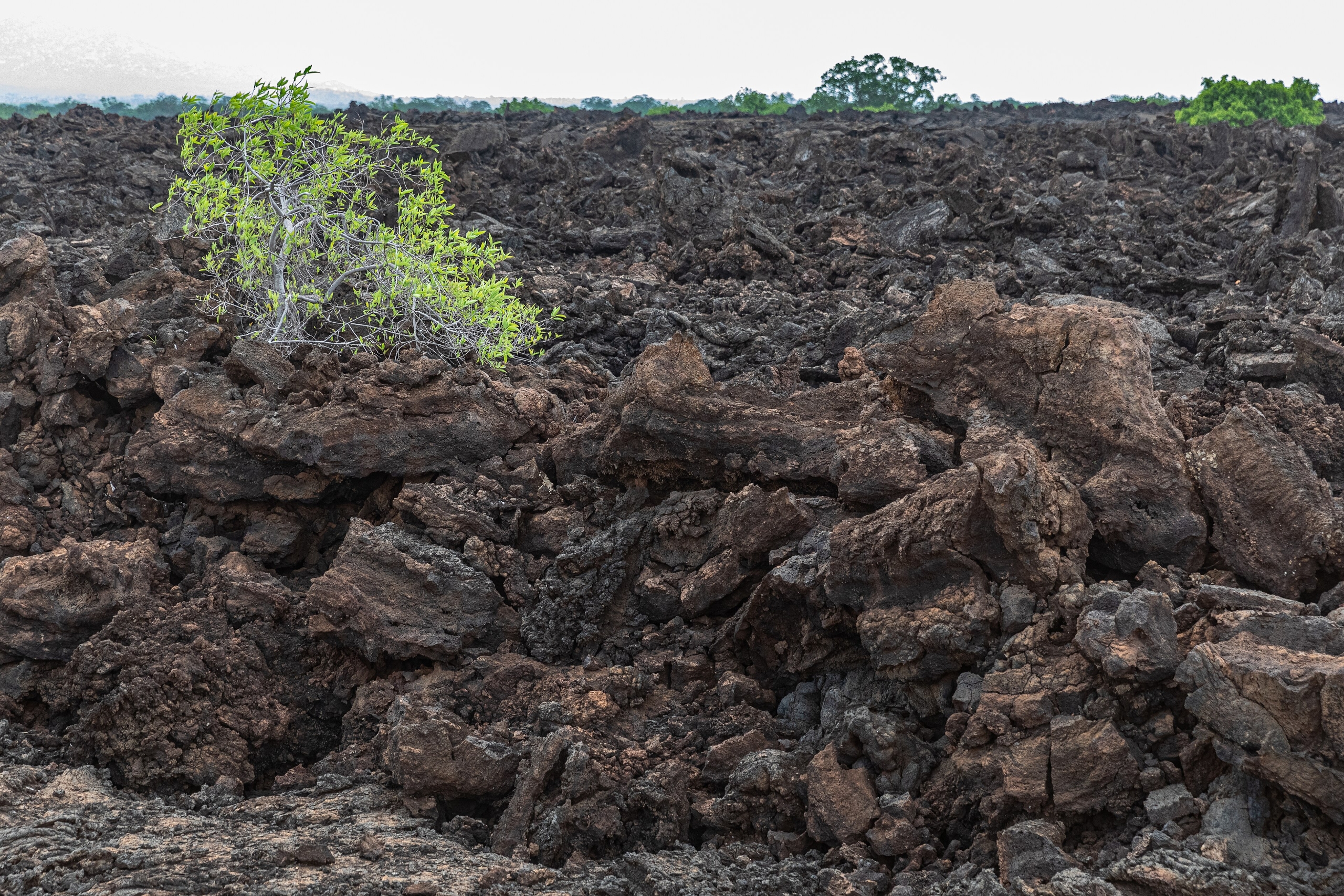
The Shetani Lava Flow is a black field of broken volcanic rock spread across the bush near Chyulu Gate in Tsavo West National Park. It is raw enough that very little grows on it, dark enough to absorb the light around it, and recent enough that people living in the area watched it happen. Shetani means devil in Kiswahili, which is what the country was called after the ground caught fire.
What Shetani Is and When It Erupted
The flow belongs to the Chyulu Hills volcanic field, a long chain of several hundred small cones and flows running north-west to south-east, well to the east of the main Kenya Rift. Volcanism in the Chyulus began well over a million years ago in the north and has migrated south-east, which is why the youngest features sit at this end, inside and alongside Tsavo West.
The date is where published accounts diverge, and it is worth being straight about it. The Smithsonian’s Global Volcanism Program records a confirmed Chyulu Hills eruption in the middle of the nineteenth century, around 1855, and attributes the Shetani and Chaimu cones and flows to it. Conservation organisations working in Tsavo describe the flow as roughly 240 years old. Travel material commonly says two hundred years, several hundred years, or five hundred years, with no source attached. The mid-nineteenth-century date is the one with a scientific record behind it.
Whichever figure is right, the practical point stands: this is the most recent large lava field in Kenya, and it looks it. Colonising vegetation has barely started, the surface is still sharp rather than weathered round, and obsidian is scattered through it.
Dimensions for the flow are given by conservation organisations working in Tsavo as roughly 8 kilometres long, 1.6 kilometres wide and 5 metres deep. Kenya Wildlife Service publishes no dimensions of its own for the flow.
Walking on the Lava
Shetani is one of the places in Tsavo West where getting out of the vehicle is normal, and there is a short route out onto the flow from the road. It is not a hike; it is a walk onto a surface unlike anything else in a Kenyan park.
The surface is the whole problem and the whole appeal. Broken lava is razor-edged, it shifts underfoot, and the blocks bridge voids that are not visible until a foot goes into one. Sturdy boots rather than trainers, and no sandals. There is no shade anywhere on it, and black rock in equatorial sun does what black rock in equatorial sun does, so this is a first-hour or last-hour stop.
Shetani Caves
Alongside the flow are the Shetani caves, lava tubes and voids left in the flow as it cooled. Kenya Wildlife Service lists cave exploration alongside the lava flow as one of the park’s attractions.
Going in needs a torch and a realistic view of what is inside. Bats use the caves. So, at times, do hyena and other animals looking for shade or shelter, and a cave entrance is precisely the place a visitor should not walk into unannounced. The roof is low in places, the floor is the same sharp rubble as the surface, and there is no lighting or handrail of any kind. Going in with a guide rather than alone is the sensible default, and some visitors are content to look from the entrance.
Wildlife on and Around the Flow
The flow itself is close to barren. There is little for grazers, little cover and no water, so animals cross it rather than live on it. What the site does give is a striking setting, and the ground either side of the lava carries the normal Tsavo West game.
Look instead at the colonisation. Lichens, then succulents, then grasses and eventually small trees are taking the flow back at the edges and in the pockets where soil has gathered, and the sequence is legible as a gradient from the margins inward. For anyone interested in how a landscape rebuilds itself from bare rock, this is the clearest example in the country.
Practical Notes
- The flow sits a few kilometres inside Chyulu Gate, on the route between Amboseli and the northern Tsavo West lodges, so it costs almost no detour for anyone entering the park from that side.
- Go early or late. The rock is punishing at midday and the low, raking light is what makes the texture of the flow photograph well.
- Boots, water, a hat and a torch for the caves. Sunscreen matters more here than in shaded bush.
- Watch where you put your hands. Obsidian and freshly broken lava both cut.
- Single-use plastic is prohibited in Kenyan national parks.
Shetani Lava Flow Questions
How old is the Shetani Lava Flow?
Most likely mid-nineteenth century. The Smithsonian’s Global Volcanism Program records a confirmed Chyulu Hills eruption around 1855 and ties Shetani to it. Older figures circulating in travel material are not sourced.
Can you walk on it?
Yes, and it is one of the few places in the park where leaving the vehicle is routine. Wear boots with a solid sole, because the rock is sharp and unstable, and keep to the worn route where one is obvious.
Are the caves safe to enter?
They are unlit, unimproved and used by bats and occasionally by larger animals. Anyone going in should have a torch, should not go alone, and should be prepared to turn round. Looking from the entrance is a legitimate choice.
What does Shetani mean?
Devil, in Kiswahili. The name records how the eruption was understood by people who saw the country burn.
Is it related to the Yatta Plateau?
Only in the sense that both are lava. The Yatta Plateau across in Tsavo East is a middle Miocene flow, millions of years old. Shetani is a matter of centuries. The two sit in the same conservation area and in completely different geological eras.
Shetani and the Volcanic North of Tsavo West
Shetani, Chaimu Crater and the water at Mzima Springs are three expressions of the same system. The Chyulu Hills erupted this rock, and the same porous volcanic pile is what filters and delivers the water that surfaces at the springs. Seeing the three together in one morning is the clearest lesson in geology available on a Kenyan game drive. Fees, gates and seasons belong to the Tsavo West guide, and the index of named sights is on the Kenya attractions hub.
4 Places to Visit in This Area
Other sites in Tsavo West National Park Safari Guide, each with its own guide.
Safaris That Visit Tsavo West National Park
3 of the 5 safaris listed here that visit Tsavo West National Park, from different operators where the listings allow it. Each is sold and run by an independent tour company. This site lists them and passes on enquiries; it takes no booking and charges you nothing.


7 Days Wildlife Safari in Kenya
by Kori Safaris
Operator quotes on request
View Safari

Kenya Classic: Amboseli, Tsavo & the Mara
by Ancient Africa Safaris
From $9,400 per person
View Safari

3 Days Tsavo East and Tsavo West Safari
by Tranquil Safaris
Operator quotes on request
View Safari