
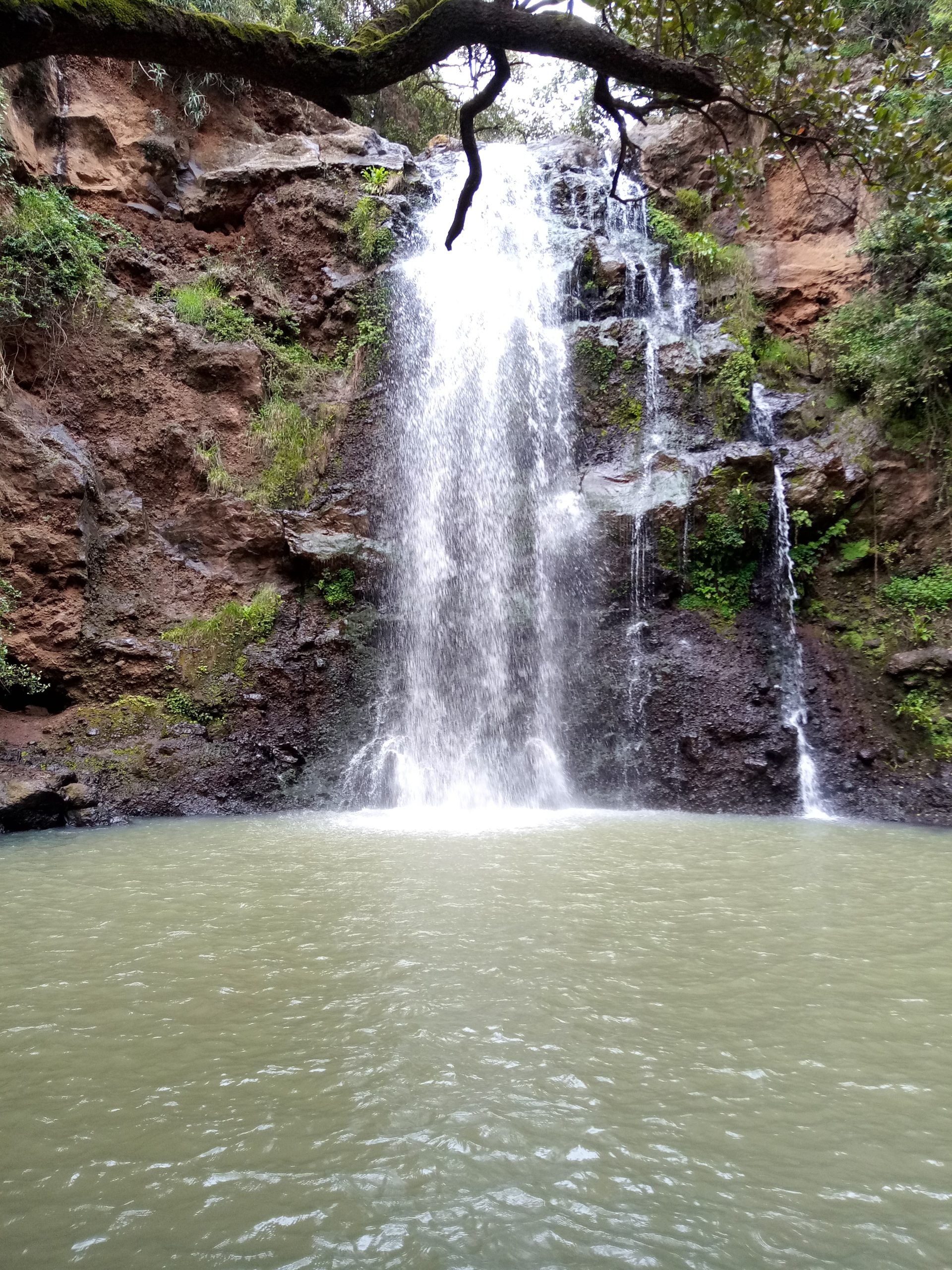
Ngare Ndare Forest
Ngare Ndare is a strip of indigenous forest on the northern foothills of Mount Kenya, between the mountain and the plains of Lewa. It is known to visitors for a canopy walkway and a set of turquoise pools, and it exists as protected ground for a different reason entirely: it is the corridor elephants use to move between the mountain forest and the northern rangelands. Understanding that changes what the place looks like.
A Corridor First
Elephants have moved between the Mount Kenya forests and the lowlands to the north for as long as anyone can establish. Farms, fences and a tarmac highway cut that route, and the consequence was an isolated mountain population and crop raiding where animals tried to get through anyway. Ngare Ndare is the forest that route runs through, which is why the Ngare Ndare Forest Trust exists and why the trees are still standing.
The Trust describes its purpose as sustained conservation of the forest together with development of the surrounding communities, and it returns 60 per cent of its eco-tourism revenue to community projects. Visitors paying a gate fee here are paying into that arrangement rather than into a national park system.
The Elephant Underpass
The corridor’s most-discussed feature is a tunnel. The route crosses the busy Nanyuki to Meru highway, and in 2010 an underpass was built beneath it so animals could cross without meeting traffic. The first elephant went through on 1 January 2011, the first structure of its kind in East Africa, and camera traps on the ceiling have monitored its use since.
The work was led by the Mount Kenya Trust with Lewa, Borana, the Kenya Forest Service and the Kenya Wildlife Service, and the corridor land is managed jointly with the neighbouring Kisima and Marania farms. Nothing is visible at it and it is not a visitor attraction, but it is the reason the forest works as a corridor rather than a dead end.
Part of a World Heritage Property
When UNESCO modified the boundaries of the Mount Kenya National Park and Natural Forest property in 2013, it added the Lewa Wildlife Conservancy and the Ngare Ndare Forest Reserve as a second component part, taking the property to 202,334 hectares with a 69,339 hectare buffer zone. The reasoning was connection rather than scenery. So the forest is part of a World Heritage property, and it is one because of the elephants rather than because of the pools.
The Canopy Walkway
The walkway is a suspended bridge of wire mesh and cables running 450 metres through the canopy, around thirty feet above the forest floor on the Trust’s own figures, which describes it as the longest in East Africa. It finishes on a raised platform overlooking a swamp where elephants and other animals come down to drink.
It is a walk rather than a ride: no harness, no zip line, no adrenaline component, and the interest is in being level with the middle storey of an indigenous forest. The platform at the end is where people linger, because whether anything is at the water is luck and patience.
The Blue Pools
The pools are the reason most Kenyan visitors come. The Trust counts six natural pools and waterfalls in the middle of the forest, fed by water off Mount Kenya, with a waterfall of around thirty feet at the best-known of them. The colour is the draw, an improbable clear turquoise against dark rock and forest.
Two things are worth knowing before arriving in swimming clothes: the water comes off a mountain and is properly cold whatever the weather, and some pools are deeper than they look. The Trust’s marked trail to the waterfalls runs about 3.5 kilometres and takes roughly an hour on foot.
Weekdays and weekends here are different places. The pools are a popular Kenyan day trip, and on weekends and public holidays they draw a crowd; midweek the same spot is often empty. Anyone whose picture of Ngare Ndare is a silent forest pool should go on a Tuesday.
Walking, Wildlife and the Armed Escort
An armed ranger accompanies walks, and this is not a formality: the forest holds elephant and buffalo that use it as a thoroughfare. The Trust records over two hundred bird species, including Hartlaub’s turaco and Narina trogon, with colobus monkey, bushbuck, waterbuck, warthog and hyena among the mammals.
The Trust also offers game drives on the forest tracks, rock climbing for parties bringing their own gear, and two campsites with running water, a toilet and a bathroom. See forest walks in Kenya and camping safaris.
Fees and Booking
The Ngare Ndare Forest Trust publishes its own rates, and they are not on the Kenya Wildlife Service schedule because this is not a national park. The figures below are the Trust’s published eco-tourism rates, checked on 21 September 2026. The Trust’s page carries no effective date, so confirm before travelling.
| Charge | Citizen or resident | Non-resident |
|---|---|---|
| Day trip, per adult | KSh 2,000 | KSh 4,000 |
| Camping, per adult per night | KSh 3,000 | KSh 5,000 |
| Vehicle, 14-seater and below | KSh 500 | KSh 500 |
| Ranger, per day walk or per night | KSh 1,000 | KSh 1,000 |
Children aged 10 to 15 pay half the adult rate and under-tens are free. Vehicles larger than a 14-seater are charged KSh 1,000, and school groups have their own rate. The Trust asks for bookings at least two days ahead, which is how rangers are assigned and numbers at each feature are spread through the day.
Getting There
The forest lies north east of Nanyuki, and Timau on the road towards Meru is the turn-off. It works as a day trip from Nanyuki and fits into a stay on the northern side of Mount Kenya or a Laikipia itinerary. The forest tracks want clearance, particularly after rain.
Questions About Ngare Ndare Forest
Are the Blue Pools a separate place from Ngare Ndare Forest?
No. The pools are inside the forest, reached on the Trust’s marked trail, and a visit to one is a visit to the other. They are often written about as though they were a standalone destination, which is why they are covered here as part of the forest rather than apart from it.
Can you swim in the Blue Pools?
Yes, and people do. The water comes straight off Mount Kenya and is cold in any weather, and some pools are deeper than they appear. Going with the ranger and following local advice about which pool to use is the sensible approach.
Do you need to book in advance?
The Trust asks for at least two days’ notice. Rangers have to be assigned and the use of the canopy walkway and pools is spread between groups, so arriving without a reservation at a busy time may mean a long wait or no entry.
Safaris That Visit Laikipia
Every safari listed here that visits Laikipia. Each is sold and run by an independent tour company. This site lists them and passes on enquiries; it takes no booking and charges you nothing.
Open the full Laikipia listing
