
Two operators can quote the same seven days in Kenya, name the same four parks, and differ by a factor of three in price. Read both itineraries side by side and the difference is almost never in the places. It is in about nine lines, most of them short, and several of them missing.
This is not a complaint about operators. An itinerary is a commercial document, written to be read quickly and to look attractive, and the things that actually move a price are dull. But a traveller who knows which nine lines to look for can compare two quotes properly and ask for the missing ones before deciding, which is a much cheaper conversation than having it at a park gate.
1. What the day count is counting
“7 days / 6 nights” is the number every itinerary leads with, and it is the one that tells you least. Ask instead how many mornings you will be inside a park with the sun coming up.
A three-day Mara safari out of Nairobi is usually two nights and, in practice, one full day of game viewing: day one is a five to six hour drive with an afternoon drive at the end of it, and day three is the drive back. That is a real trip, and for some travellers it is the right one, but it is not three days of safari. The itinerary is not being dishonest — it is counting calendar days, because that is the convention. Count game-viewing days yourself. The guide to how many days you need in Kenya works through what each additional night actually buys.
2. Where the nights are, not just which parks appear
A list of parks in a heading is not a list of places you will see properly. Two itineraries can both say “Mara, Nakuru, Amboseli” while one gives three nights in the Maasai Mara and the other gives one.
Redraw any itinerary as a column of nights with a place written beside each. The shape of the trip appears immediately, and so does the proportion of it spent in a vehicle between places. One night anywhere means arriving in the afternoon and leaving after breakfast with a single game drive in between, and the drive in and out often costs more hours than that drive returns.
3. Full board, half board, and what “all meals” leaves out
Board terms are not standardised across the industry, and the same three words mean slightly different things at different properties. Bed and breakfast is bed and breakfast. Half board is usually breakfast and dinner, which on a safari day means lunch is either a picnic box arranged separately or a stop that is not in the price. Full board is all three meals, but almost never all drinks.
Drinks are where the gap usually sits. Bottled water in the vehicle is normally included and worth confirming, because in the dry season it is a real quantity. Alcohol usually is not. Some camps include what they call house drinks, meaning a defined list rather than everything behind the bar. And on the days a trip moves between properties, ask which of that day’s meals belongs to which side of the transfer, because that is the meal that goes missing.
4. Park fees: included, excluded, or payable at the gate
This is the largest variable line in most Kenyan quotes and the one most often left to a footnote. There are three quite different answers, and an itinerary should say which applies: the fees are in the price, the fees are excluded and you will be told the amount, or the fees are payable by you on arrival.
Kenya does not have one park fee. Most parks are Kenya Wildlife Service and run on a schedule set by regulation. The Maasai Mara National Reserve is not KWS but Narok County, on its own structure, which varies by season. And the conservancies bordering the Mara charge a separate per-person conservancy fee for every night you sleep inside them, which is how that model is funded in the first place. A quote covering a Mara-and-conservancy trip therefore contains at least two fee regimes and possibly three. The guide to what a Kenya safari costs sets out the current published figures with their sources.
One thing worth knowing when a quote looks unusually good: the KWS schedule is revised periodically and the current one took effect on 1 October 2025. A price built on an older sheet is not a cheaper trip. It is an under-priced one, and the difference appears at the gate.
5. A private vehicle, or a seat in one
If you read only one line of an itinerary, read this one. It changes the trip more than the accommodation tier does.
A seat-in-vehicle safari puts you in a shared vehicle with other travellers, usually six or seven of them, and the day runs by consensus: when it leaves, how long it stays with a sighting, whether it goes back for the leopard. A private vehicle means those decisions belong to you and the guide. The gap in price is substantial and the gap in experience is larger, particularly for photographers and for anyone who wants to sit with one animal for forty minutes.
Where an itinerary says shared, three questions are worth asking before booking: the guaranteed maximum number of travellers in the vehicle, whether every passenger is guaranteed a window seat — a seven-seat conversion has seats that are not beside one — and whether the vehicle has a pop-up roof or open sides, because standing through a roof hatch and looking out of a fixed window are different days.
6. Who the guide is
On most Kenyan road safaris the driver is the guide. That is the normal arrangement and not a lesser one: a good driver-guide is the single largest factor in what you see. But it is worth knowing whether that is what you are getting, or whether the itinerary implies a specialist guide travelling alongside a driver, which is a different price.
Reasonable things to ask: how long the guide has worked with the company, whether they hold a professional guiding qualification and at what grade, which languages they work in, and whether the same guide stays with you for the whole circuit or changes at each park. Asking at the quote stage is normal and operators expect it.
7. “Or similar”
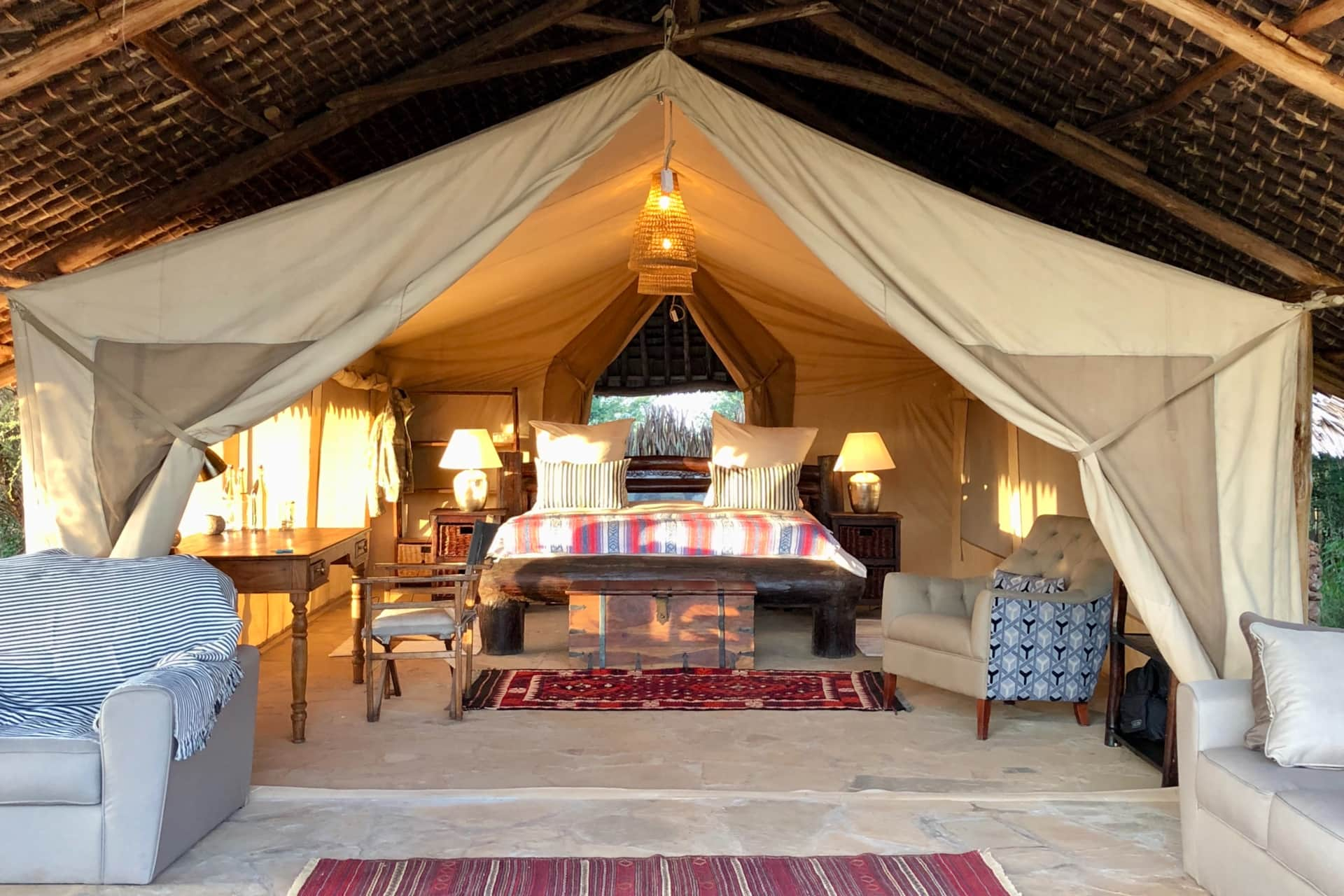
Two words, and they can move a trip a whole tier. They are often legitimate: camps sell out, and an operator quoting six months ahead cannot hold every room. But “Mara camp or similar” is a commitment to nothing, and the substitute may be an hour further from the gate, outside the reserve rather than inside it, or a lodge of eighty rooms where the original was a camp of nine.
Ask for the named property and the room or tent type, and, where it genuinely cannot be held, the two or three alternatives actually in play, so you can look them up yourself.
8. Travelling alone
Safari pricing is built on two people sharing a room, and a solo traveller pays a single supplement on top of the per-person rate. It is not a penalty invented for the occasion — a camp with nine tents has sold one of them either way — but it can be a large number, it is frequently absent from the headline price, and it varies enormously between properties and seasons. If you are travelling alone, ask for it as a separate figure before comparing two quotes, because the quote with the lower headline is not reliably the cheaper trip.
9. How you actually move between the parks
Kenya’s safari regions are far apart, and the choice between driving and flying changes both the cost and the number of usable hours in a trip. An itinerary should say which legs are by road and which are by light aircraft, who meets you at each end, and whether a transfer day is also a game drive — in Tsavo or between Mara camps it often is, which turns a lost day into a good one. The guide to getting around Kenya covers what each mode costs in time as well as money, including the luggage constraint that catches people out on bush flights.
What to put in a first enquiry
Most quotes come back non-comparable because the enquiries that produced them were non-comparable. One paragraph containing these six things fixes that, and it takes a minute to write:
- Your dates, or the month and roughly how many nights.
- How many of you, and the ages of any children travelling.
- Whether you want a private vehicle or will share one.
- A budget, as a range, per person, excluding international flights.
- The two or three things that must be in the trip — a river crossing, rhino, the coast, a day on foot.
- Your pace: fewer places for longer, or more places.
Send the same paragraph to everyone you are considering and the replies arrive on comparable terms. The quality of the answer tells you something too: an operator who reads six lines and responds to five of them is showing you how the rest of the trip will go.
Every safari on this site is written and priced by the company selling it, and an enquiry goes to that company rather than to us. Browse the safaris to see how different operators have built the same weeks.